 Save
Save My neighbor brought over a soba noodle bowl last summer, and I watched her assemble it with such ease that I felt foolish for never thinking to make it myself. The noodles were silky, the vegetables stayed crisp, and that sesame dressing tied everything together in a way that felt both simple and intentional. I went to the market that same afternoon and have been making versions of it ever since, tweaking the vegetables with whatever looks fresh and adjusting the dressing to my mood.
I made this for my coworkers during a potluck, and someone asked if I'd bought it from the Japanese place down the street. That moment—realizing I'd made something that tasted restaurant-quality in my own kitchen—shifted how I thought about weeknight cooking. Now I pack it for lunch knowing it'll be the one thing everyone asks about.
Ingredients
- Dried soba noodles (250 g): Look for 100% buckwheat if you're avoiding gluten, though the regular stuff has a better texture if you can eat it. The package will tell you the exact cooking time, which is usually around 4-5 minutes.
- Shelled edamame (1 cup): Frozen works just as well as fresh and saves you the effort of shelling. They add protein and a pop of green that makes the bowl look alive.
- Cucumber (1 medium): Julienne it thin so it stays crisp and absorbs just a hint of the dressing without going soggy.
- Carrots (2 medium): The sweetness balances the salty dressing, and they keep their crunch even when tossed together.
- Scallions (2): Slice them just before serving so they don't wilt and lose their brightness.
- Toasted sesame seeds (2 tbsp): Buy them already toasted if your store carries them, otherwise toast raw ones in a dry pan for a minute until fragrant.
- Fresh cilantro or mint (1/4 cup optional): Either one works, though mint feels more refreshing on warm days.
- Soy sauce (3 tbsp): Use tamari if gluten is a concern—the flavor is nearly identical and you won't miss anything.
- Rice vinegar (2 tbsp): This is the acid that keeps the bowl from tasting heavy, so don't skip it or dilute it.
- Toasted sesame oil (1 tbsp): A little goes a long way; this is where the dressing gets its soul.
- Tahini or peanut butter (1 tbsp): Tahini is more authentic, but peanut butter works if that's what you have and you're okay with the label.
- Honey or maple syrup (1 tbsp): Just enough to round out the flavors without making it sweet.
- Fresh ginger (1 tsp grated): Grate it fresh from a piece you've peeled with a spoon—it wakes up the entire dressing.
- Garlic clove (1 small minced): One is enough; too much will overpower everything else you've balanced.
- Water (1 tbsp): Keep extra on hand to thin the dressing if it sits for a while.
Tired of Takeout? 🥡
Get 10 meals you can make faster than delivery arrives. Seriously.
One email. No spam. Unsubscribe anytime.
Instructions
- Get your water boiling:
- Fill a medium saucepan with salted water and bring it to a rolling boil. You want enough water so the noodles move freely while cooking, or they'll stick together into a clump.
- Cook the soba:
- Add the noodles and stir immediately so they separate. Cook for the time on the package—usually 4 to 5 minutes—and taste one to make sure it's tender with just a tiny bit of resistance in the center.
- Drain and cool the noodles:
- Pour them into a colander and rinse under cold running water until they're no longer hot and any excess starch is gone. This stops them from cooking further and prevents clumping.
- Blanch the edamame:
- While the noodles cook, drop the edamame into the same boiling water for 2 to 3 minutes. They should still have a slight firmness when you bite them, not mushy.
- Make the dressing:
- In a small bowl, whisk together the soy sauce, rice vinegar, sesame oil, tahini, honey, ginger, and garlic until smooth and creamy. If it feels too thick, add water a teaspoon at a time until it coats a spoon but still pours.
- Prep your vegetables:
- Julienne the cucumber and carrots into thin matchsticks, and slice the scallions on a slight angle. Do this last so everything stays as crisp as possible.
- Toss the noodles:
- In a large bowl, combine the cooled soba with about half of the dressing and toss gently so every strand gets coated. Taste and adjust the seasoning if needed.
- Compose your bowls:
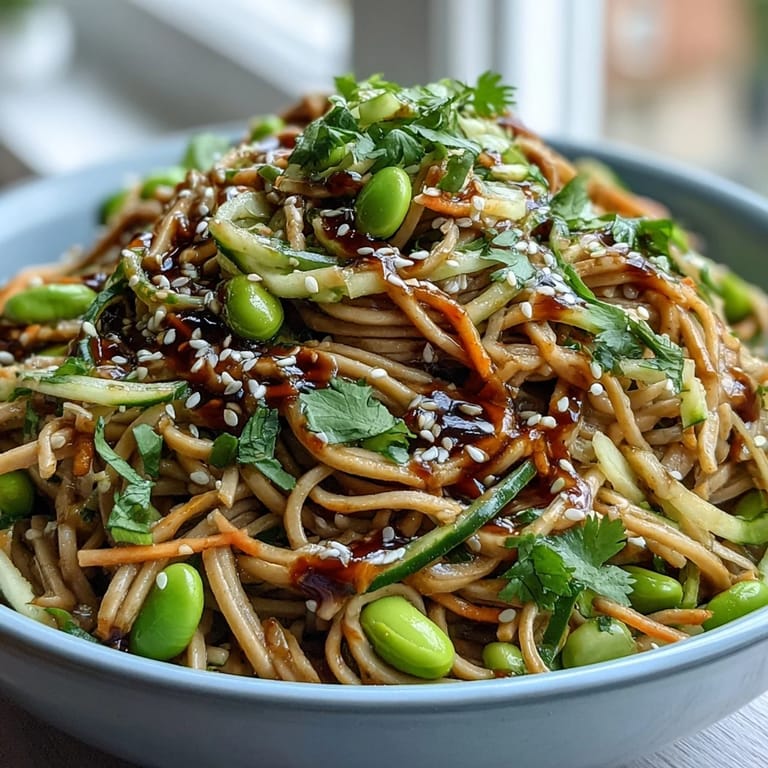
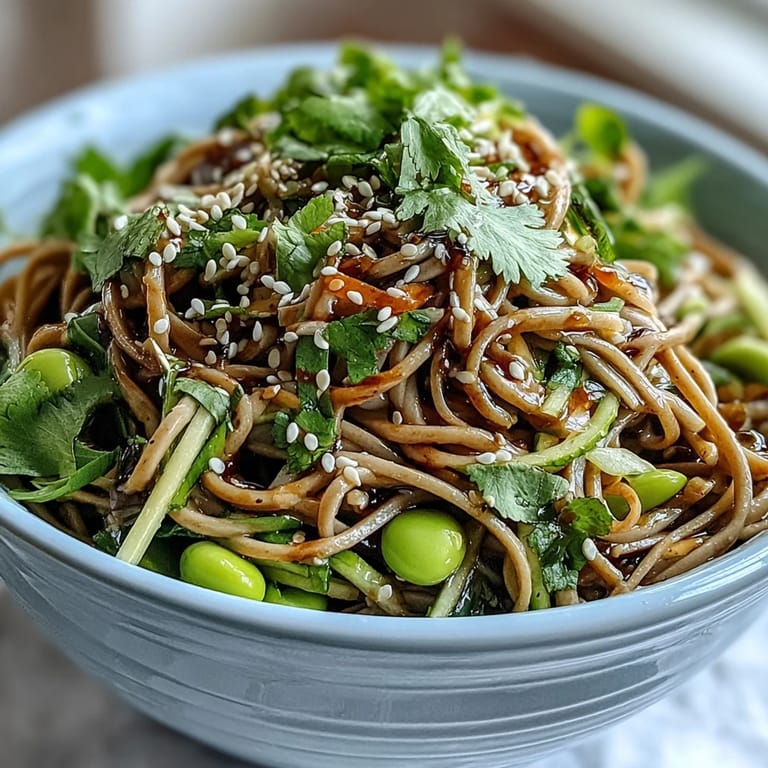
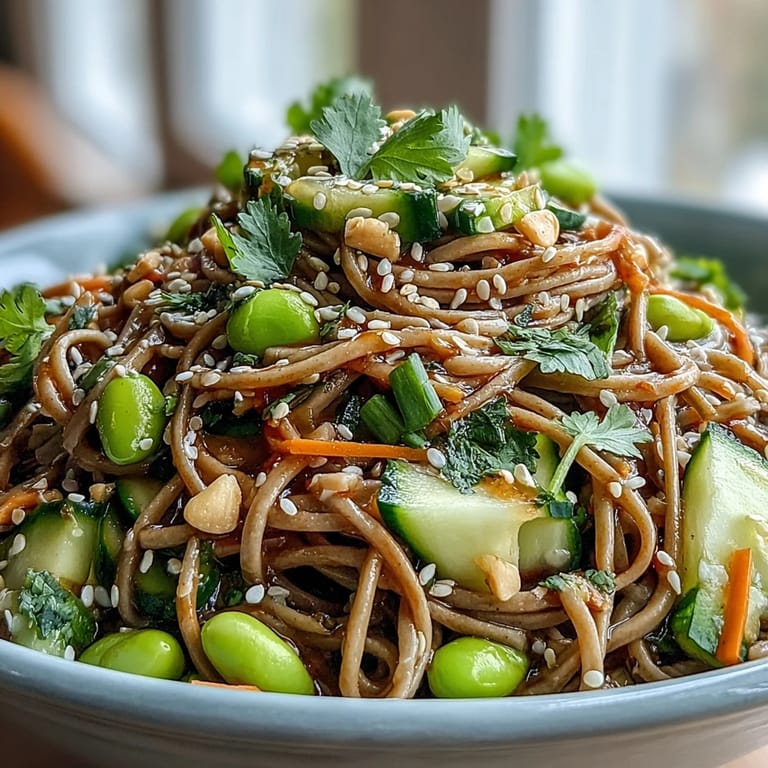
- Divide the dressed noodles among four bowls, then arrange the edamame, cucumber, carrots, and scallions on top of each one. This makes the bowl look intentional and lets people see what they're eating.
- Finish and serve:
- Drizzle the remaining dressing over top, scatter the sesame seeds and fresh herbs across, and serve right away while everything is still cool and the textures are distinct.
 Save
Save There's something quiet about eating a cold noodle bowl on a warm evening, the kind of meal that feels less like dinner and more like taking care of yourself. My family has started requesting it without prompting, which tells me I've created something that feels special without requiring hours in the kitchen.
Why Cold Noodles Matter
When I first made this, I served it warm and it felt heavy in a way that defeated the whole purpose. Cold noodles let you taste every ingredient individually—the crunch of the vegetables, the earthiness of the buckwheat, the brightness of the sesame—instead of having everything blur together. There's also something psychologically restorative about cold food in the summer months, like your body knows what it needs.
Building Flavor Through Texture
The best version of this bowl comes from contrast: soft noodles against crisp vegetables, creamy dressing pooling around chewy edamame, the gentle heat of fresh ginger cutting through the richness. If you cook everything to the same softness, you lose the conversation happening in your mouth. The sesame oil might be just one tablespoon, but it does more work than three times that amount of something mild.
Making It Your Own
I've added snap peas in spring, roasted beets for color and earthiness, and thinly shaved radishes when I wanted more punch. A soft-boiled egg transforms this from light lunch into a legitimate dinner, and grilled tofu makes it feel even more substantial. The dressing stays the same, which means you can play with what's in season and the bowl will still hold together.
- Keep extra sesame oil on hand because you'll want to drizzle more than you initially planned.
- If you're making this ahead, dress only half the noodles and keep the vegetables separate until you're ready to eat.
- Toast your own sesame seeds if you have time—the difference between store-bought and fresh-toasted is worth the three minutes.
 Save
Save This bowl has become my answer to those days when I want to cook something that feels nourishing without being complicated. It reminds me that the best meals are often the ones that let good ingredients speak for themselves.
Recipe FAQs
- → Can I make this dish gluten-free?
Yes, choose 100% buckwheat soba noodles and substitute tamari for the soy sauce. Many brands blend buckwheat with wheat, so check labels carefully to ensure the noodles are entirely gluten-free.
- → How should I store leftovers?
Keep undressed components in airtight containers for up to 3 days. Store the dressing separately and toss just before eating to maintain the vegetables' crisp texture.
- → What can I substitute for edamame?
Shelled peas, chickpeas, or grilled tofu cubes work beautifully. For extra protein, try adding shredded chicken or a soft-boiled egg on top.
- → Can I serve this warm or cold?
Both work wonderfully. Chill the noodles after rinsing for a cold version, or toss them with dressing while still warm for a comforting hot bowl.
- → How do I prevent soba noodles from sticking together?
Rinse thoroughly under cold water immediately after draining to remove excess starch. Toss with a small amount of sesame oil or dressing before storing.