 Save
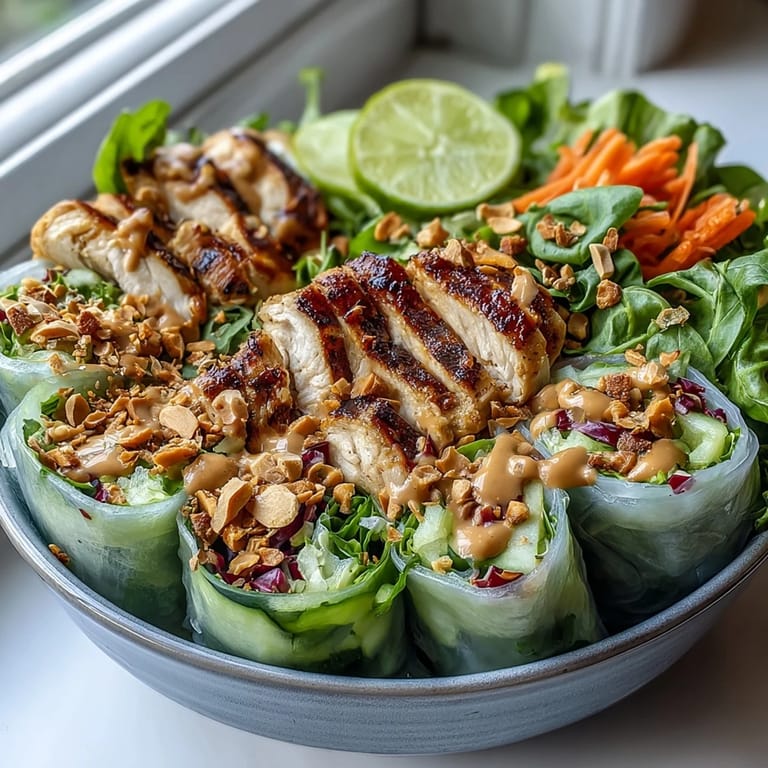
Save My coworker brought one of these rice paper roll bowls to lunch last Tuesday, and I watched her eat it with such obvious enjoyment that I had to ask for the recipe. What struck me wasn't just how beautiful it looked, but how she could assemble it in minutes without any fuss. By Friday, I'd made my own version at home, and suddenly I understood why she was so protective of her lunch container. This is the kind of dish that tastes like you spent hours cooking when you barely spent twenty minutes prepping.
I made this for my partner on a warm evening when neither of us felt like eating anything heavy, and we ended up making it again the next day because we'd both been thinking about it. There's something about spooning that creamy peanut sauce over everything that feels both indulgent and light at the same time.
Ingredients
- Rice paper sheets: These delicate wrappers soften in seconds and add a silky, slightly chewy element that can't be replicated. Pro move: don't oversoak them or they'll tear like tissue.
- Jasmine rice or vermicelli noodles: The base keeps everything grounded and absorbs the sauce beautifully. I prefer noodles for their ability to tangle with the vegetables.
- Protein choice (chicken, tofu, or shrimp): Pick whichever speaks to you that day. Shrimp adds sweetness, chicken brings heartiness, and tofu makes everything feel lighter.
- Carrot: Raw and julienned, it stays crisp and adds natural sweetness that balances the saltiness of the sauce.
- Cucumber: Deseeding prevents sogginess and keeps the bowl fresh. This is one of those small steps that makes a real difference.
- Red bell pepper: The color is stunning, and the crunch keeps your teeth happy with every bite.
- Red cabbage: Shredded fine, it brings both crunch and an earthy sweetness that anchors the bowl.
- Mixed salad greens: Any tender greens work here. I use whatever looks bright at the market.
- Fresh mint and cilantro: These herbs are not optional. They're what makes this bowl feel Vietnamese rather than just another colorful salad.
- Creamy peanut butter: Full-fat natural peanut butter works better than the hydrogenated kind. It whisks smoother and tastes richer.
- Soy sauce: Use tamari if you need it gluten-free. The depth it adds is worth the extra step.
- Hoisin sauce: This brings a subtle sweetness and umami punch that makes people ask what your secret ingredient is.
- Rice vinegar: It brightens everything without overpowering. White vinegar works in a pinch but tastes sharper.
- Lime juice: Fresh lime only. Bottled tastes like regret.
- Sriracha: Heat is optional but recommended. It adds a whisper of fire that makes the other flavors pop.
- Warm water: This is how you control the sauce consistency. Start with less and add gradually.
- Roasted peanuts: The final crunch that makes people slow down and savor rather than rush through the bowl.
- Fried shallots: If you find them, grab them. They add an oniony sweetness and incredible texture that feels like a bonus.
- Lime wedges: Squeezing fresh lime over the finished bowl is the final touch that ties everything together.
Tired of Takeout? 🥡
Get 10 meals you can make faster than delivery arrives. Seriously.
One email. No spam. Unsubscribe anytime.
Instructions
- Soften the rice paper:
- Fill a shallow dish with warm (not hot) water and dunk each sheet for just five to ten seconds until it's pliable but still slightly firm. Lay them out on a clean kitchen towel in a single layer and let them firm up slightly before handling.
- Cut the rice paper:
- Once they've cooled, stack two or three sheets together and cut them into rough strips or squares with your knife or kitchen shears. The imperfect shapes actually look more appealing in the bowl than uniform pieces.
- Cook your protein:
- If using chicken, grill or pan-fry it until the edges are golden and the inside is cooked through. Tofu should be pressed first to remove excess moisture, then cubed and either pan-fried until it develops a slight crust or served raw if you prefer it softer.
- Prepare vegetables:
- Wash everything thoroughly and slice or julienne according to the list. The thinner you cut things, the more they'll soak up the sauce and meld into the bowl as you eat.
- Make the sauce:
- Whisk the peanut butter with soy sauce, hoisin, rice vinegar, lime juice, and sriracha in a small bowl until well combined. Add warm water one tablespoon at a time until the sauce reaches a drizzleable consistency that's not too thick.
- Build your bowls:
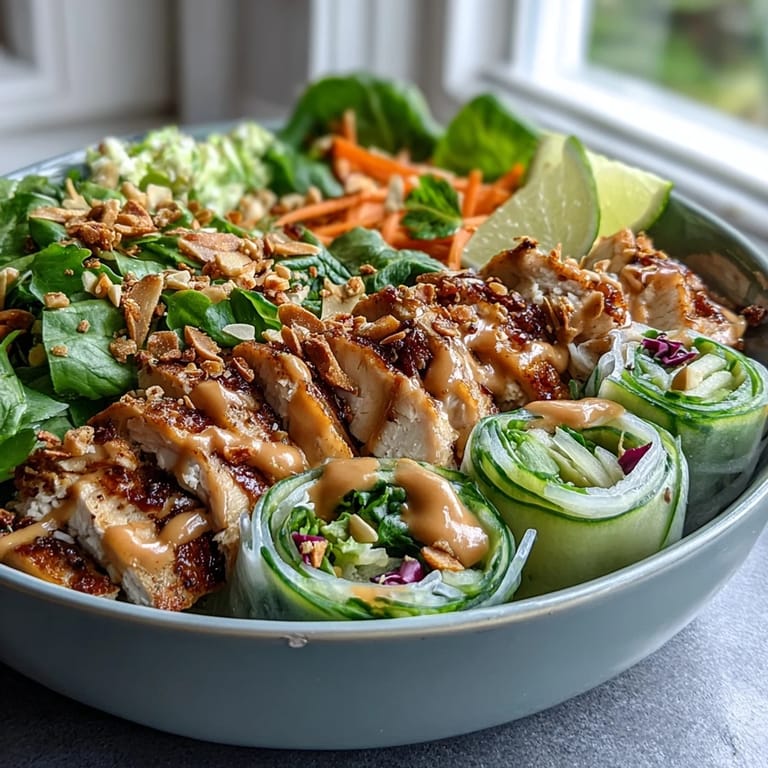
- Start with a base of rice or noodles in each bowl, then layer the rice paper pieces, vegetables, greens, and herbs on top. Place your protein over everything so it's the star of the show.
- Finish and serve:
- Drizzle the peanut sauce generously over each bowl, then scatter the chopped peanuts and fried shallots across the top. Serve with lime wedges for last-minute brightness.
 Save
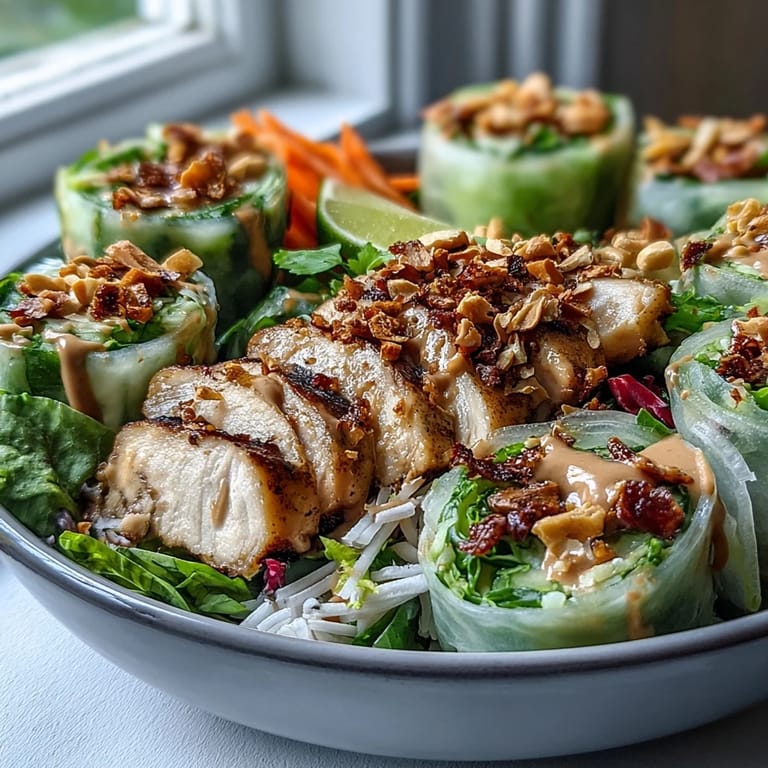
Save One afternoon I added pickled vegetables as an afterthought, and suddenly the whole bowl went from nice to absolutely craveable. That's when I realized this isn't just a recipe to follow but a template for improvising based on whatever's in your fridge.
Why Rice Paper Over Regular Spring Rolls
The magic here is that you're getting all the flavors and textures of a spring roll without having to actually roll anything. That's not laziness, it's efficiency. The rice paper pieces soak up the sauce, the noodles provide substance, and every bite tastes complete because everything's already mixed together instead of layered in a tight wrapper. Plus, there's something satisfying about the visual chaos of a deconstructed bowl that feels both relaxed and refined.
Customizing Your Protein
Shrimp cooks fastest and brings a delicate sweetness that pairs beautifully with the peanut sauce. Chicken is the reliable choice and stays moist if you don't overcook it (slicing on a slight angle helps it cook faster). Tofu is where the magic happens for vegetarians and vegans, especially if you press it well and pan-fry it until the edges crisp up. Any of these three will work, but choosing which one changes the whole feeling of the meal.
Sauce Science and Storage
The peanut sauce is forgiving but benefits from resting for five minutes after whisking so the flavors settle and deepen. Make it ahead and store it in a jar in the fridge for up to five days. When you're ready to use it, bring it to room temperature or heat it gently so it's drizzleable, not stiff.
- A squeeze of extra lime juice revives the sauce if it tastes flat or too salty.
- If your sauce is too thick, add warm water one teaspoon at a time rather than dumping it all in at once.
- Taste as you go when making the sauce because everyone's soy sauce and peanut butter is slightly different.
 Save
Save This bowl has become my go-to move for feeding people without stress, which says everything about how forgiving and delicious it truly is. Make it once and it'll become your move too.
Recipe FAQs
- → How do I prevent rice paper from getting soggy?
Cut the rice paper just before serving and keep the pieces separate from the vegetables until ready to eat. The sauce should be added right before enjoying to maintain the delicate texture.
- → Can I make this bowl ahead of time?
Prepare all vegetables and sauce up to 24 hours in advance. Store components separately in airtight containers. Cut and assemble the rice paper just before serving for optimal texture.
- → What protein works best?
Grilled chicken breast adds smoky depth, firm tofu provides protein for plant-based versions, and cooked shrimp offers a classic Vietnamese pairing. All options complement the fresh vegetables and peanut sauce beautifully.
- → How do I adjust the peanut sauce consistency?
Start with 2 tablespoons of warm water and add more as needed. The sauce should be thick enough to coat a spoon but pour easily. Warm water helps blend the peanut butter smoothly.
- → What vegetables can I substitute?
Try shredded purple cabbage, sliced radishes, bean sprouts, or mango for sweetness. The key is maintaining a variety of colors and crisp textures to balance the soft rice paper.
- → Is this bowl gluten-free?
Yes, simply use tamari instead of soy sauce and verify your hoisin is gluten-free. Rice paper is naturally gluten-free, making this an excellent option for those avoiding wheat.