 Save
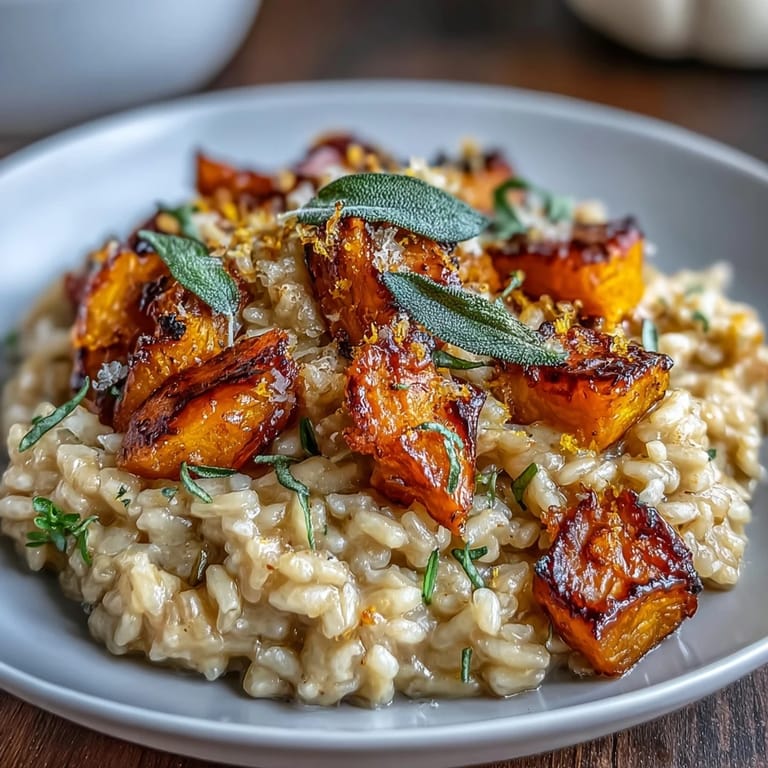
Save The smell of sage crackling in hot olive oil is what pulled my partner into the kitchen that October evening. I was standing over the stove, wooden spoon in one hand, glass of wine in the other, watching arborio rice slowly drink up golden broth. The pumpkin had just come out of the oven, caramelized at the edges, and I knew this was going to be one of those meals we'd crave every autumn after. It was the first time I'd made risotto without butter or cheese, and I wasn't sure it would work until that first creamy, nutmeg-laced bite proved me completely wrong.
I made this for a small dinner party where half the guests were vegan and the other half were skeptical omnivores. Watching everyone go quiet after the first forkful, then immediately reach for seconds, felt like a small victory. One friend, who claimed to hate pumpkin, scraped her bowl clean and asked for the recipe before dessert even arrived. That night taught me that good food doesn't need labels or explanations, it just needs to taste like something you want to keep eating.
Ingredients
- Small pumpkin (about 600 g), peeled and diced: Roasting it transforms the texture from watery to sweet and concentrated, and those golden edges add color to every spoonful.
- Medium yellow onion, finely chopped: The base of almost every risotto I've made, it melts into the background but builds essential savory depth.
- 2 garlic cloves, minced: Just enough to add warmth without overpowering the delicate pumpkin sweetness.
- 300 g (1 ½ cups) arborio rice: The short, starchy grains are what make risotto creamy without cream, releasing starch slowly as you stir.
- 1.2 liters (5 cups) vegetable broth, kept warm: Cold broth shocks the rice and slows down cooking, so I always keep mine simmering in a pot nearby.
- 120 ml (½ cup) dry white wine (optional): It adds acidity and brightness, but I've skipped it on nights when I'd rather drink the wine than cook with it.
- 3 tbsp olive oil, divided: One portion roasts the pumpkin, another builds the risotto base, and the last fries the sage into crispy, golden curls.
- 15–20 fresh sage leaves: When fried, they turn into fragrant, salty little chips that shatter when you bite them.
- ½ tsp freshly grated nutmeg: A small amount goes a long way, adding warmth and a hint of spice that ties everything together.
- Salt and black pepper, to taste: I season the pumpkin before roasting and adjust again at the end, tasting as I go.
- 2 tbsp nutritional yeast (optional): This gives a subtle cheesy, umami flavor that makes the dish feel indulgent even without parmesan.
- Zest of ½ lemon (optional): A bright, citrusy finish that cuts through the richness and wakes up the whole bowl.
Tired of Takeout? 🥡
Get 10 meals you can make faster than delivery arrives. Seriously.
One email. No spam. Unsubscribe anytime.
Instructions
- Roast the Pumpkin:
- Preheat your oven to 200°C (390°F) and spread the diced pumpkin on a baking tray, drizzling it with 1 tbsp olive oil and seasoning with salt and pepper. Roast for 20–25 minutes until the edges are golden and the flesh is tender enough to pierce easily with a fork.
- Start the Risotto Base:
- Heat 1 tbsp olive oil in a large, deep skillet or saucepan over medium heat, then add the chopped onion and cook for 3–4 minutes until it turns translucent and soft. Stir in the minced garlic and cook for another minute until fragrant.
- Toast the Rice:
- Add the arborio rice to the pan and stir constantly for about 2 minutes, letting each grain get coated in oil and lightly toasted. You'll hear a gentle crackling sound and smell a nutty aroma when it's ready.
- Deglaze with Wine:
- Pour in the white wine if you're using it, stirring until the rice absorbs almost all of the liquid. This step adds acidity and a subtle brightness that balances the sweetness of the pumpkin.
- Add Broth Gradually:
- Begin adding the warm vegetable broth one ladleful at a time, stirring frequently and waiting until the liquid is mostly absorbed before adding more. Continue this process for about 18–20 minutes until the rice is creamy and al dente, with just a slight bite in the center.
- Fry the Sage:
- While the risotto cooks, heat the remaining 1 tbsp olive oil in a small skillet over medium-high heat and fry the sage leaves for 30–60 seconds until they're crisp and darkened slightly. Transfer them to a paper towel to drain and season lightly with salt.
- Fold in the Pumpkin:
- Once the rice is nearly done, gently fold in the roasted pumpkin, nutmeg, and nutritional yeast if you're using it. Adjust the seasoning with salt and pepper, tasting as you go.
- Serve and Garnish:
- Spoon the risotto into warm bowls and top each serving with crispy sage leaves and a sprinkle of lemon zest if desired. Serve immediately while it's hot and creamy.
 Save
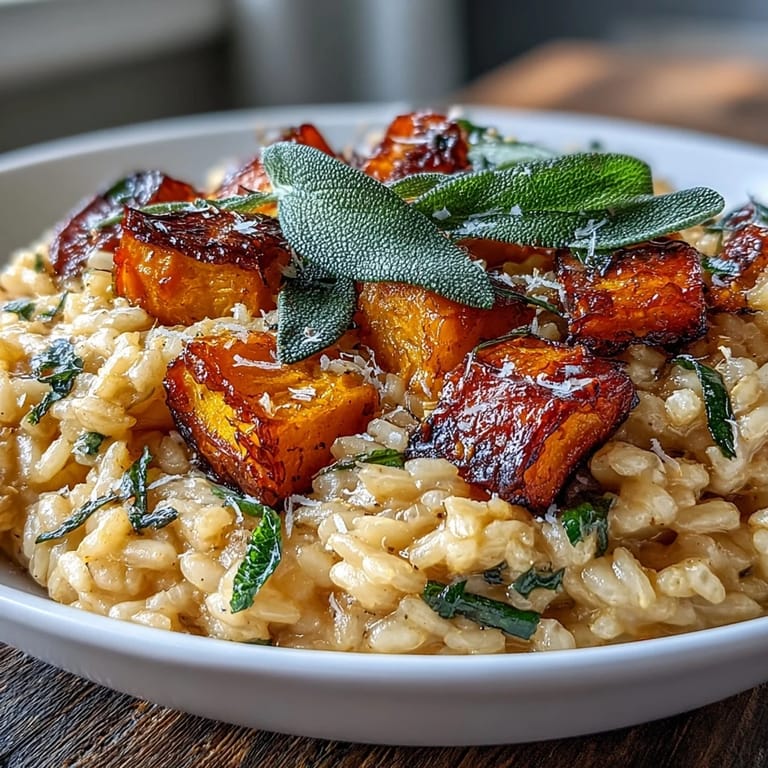
Save There's a moment near the end of cooking risotto when it shifts from soupy to creamy, when the grains swell and the texture becomes luxurious and flowing. The first time I caught that moment perfectly, I understood why Italians have been making this dish for centuries. It's not just food, it's a rhythm, a meditation, a conversation between you and the rice that rewards patience with something truly comforting.
How to Store and Reheat
Risotto is always best fresh, but I've stored leftovers in an airtight container in the fridge for up to three days. When reheating, I add a splash of vegetable broth or water and warm it gently in a saucepan over low heat, stirring frequently to bring back some of that creamy texture. The crispy sage won't survive storage, so I always make those fresh when I'm ready to serve again.
Variations You Might Love
Butternut squash works beautifully in place of pumpkin and tends to be a bit sweeter and less watery. I've also stirred in handfuls of fresh spinach or kale at the end for extra greens, and once I added a spoonful of white miso instead of nutritional yeast for a deeper umami punch. If you want a bit of crunch, toasted pine nuts or chopped roasted hazelnuts make a lovely garnish alongside the sage.
Serving Suggestions
This risotto is rich enough to stand alone as a main course, but I've also served it as a side alongside roasted vegetables or a simple arugula salad dressed with lemon and olive oil. A crisp, dry white wine or even a light sparkling cider pairs beautifully with the creamy pumpkin and aromatic sage.
- Top with extra nutritional yeast and cracked black pepper for a more savory finish.
- Serve with crusty bread to soak up every last bit of creamy goodness.
- Drizzle with a bit of truffle oil if you're feeling fancy and want to impress guests.
 Save
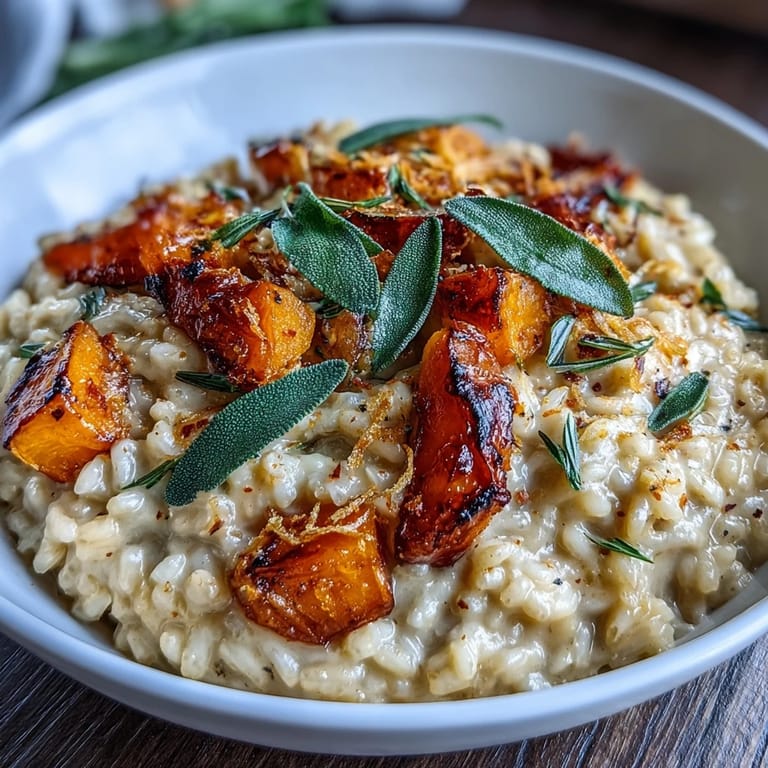
Save This dish has become my go to whenever the air turns crisp and the light starts fading early. I hope it brings you the same kind of comfort it's brought to my table, one creamy, sage scented spoonful at a time.
Recipe FAQs
- → Can I use a different type of rice instead of arborio?
Arborio rice is essential for achieving the characteristic creamy texture due to its high starch content. Carnaroli or vialone nano rice are suitable Italian alternatives, but long-grain rice will not produce the same creamy consistency.
- → How do I prevent the risotto from becoming too thick or sticky?
Add the warm broth gradually, one ladleful at a time, and stir frequently. The rice should always be slightly covered with liquid. If it becomes too thick, add more warm broth until you reach a creamy, flowing consistency.
- → Can I make this risotto ahead of time?
Risotto is best served immediately for optimal texture. However, you can roast the pumpkin up to 2 days ahead and reheat it before folding into freshly cooked rice. Leftover risotto can be refrigerated and transformed into arancini or risotto cakes.
- → What can I substitute for white wine?
You can omit the wine entirely and use additional vegetable broth instead. Alternatively, use a splash of white wine vinegar or dry vermouth for acidity. The wine adds depth but is not essential to the dish.
- → How do I know when the risotto is properly cooked?
The rice should be tender with a slight bite in the center (al dente), and the overall texture should be creamy and flow slightly when plated. This typically takes 18-20 minutes of gradual broth addition and frequent stirring.
- → Can I freeze leftover pumpkin risotto?
While freezing is possible, the texture will change significantly upon reheating as the rice continues to absorb liquid. For best results, store in the refrigerator for up to 3 days and reheat gently with additional broth to restore creaminess.