 Save
Save My partner came home one evening complaining that Brussels sprouts were boring, and I took that as a challenge. I remembered a restaurant where charred vegetables arrived glistening with something tangy and dark, so I decided to recreate it. Watching those little green orbs turn golden and crispy in the oven while a reduction bubbled away on the stove felt like solving a puzzle. The smell alone converted a skeptic that night.
Last Thanksgiving, I made this as a quiet rebellion against the same tired side dishes everyone brings. A cousin who claimed to hate vegetables asked for the recipe before dessert, and that moment alone made the recipe card worth framing. Now it shows up at every potluck in our rotation.
Ingredients
- Brussels sprouts (1 lb, trimmed and halved): Look for sprouts that feel firm and have bright green leaves, not yellowed or loose ones.
- Olive oil (2 tbsp): This is your vehicle for browning, so use one you actually like tasting since it matters here.
- Kosher salt (1/2 tsp) and freshly ground black pepper (1/4 tsp): Fresh pepper makes a real difference, not the pre-ground stuff that sits in your cabinet.
- Balsamic vinegar (1/4 cup): Splurge a little here if you can, cheaper versions taste thin and overly sharp.
- Honey (1 tbsp, optional): This softens the vinegar's edge and creates actual caramel notes, but taste your reduction first before deciding.
Tired of Takeout? 🥡
Get 10 meals you can make faster than delivery arrives. Seriously.
One email. No spam. Unsubscribe anytime.
Instructions
- Heat your oven and prep your workspace:
- Set the oven to 425°F and line a baking sheet with parchment paper if you want easy cleanup. This temperature is high enough to actually caramelize the sprouts instead of just steaming them.
- Coat everything evenly:
- Toss the Brussels sprouts with olive oil, salt, and pepper in a large bowl until each piece glistens. Don't skip this step or you'll end up with dry, pale sprouts.
- Arrange cut-side down:
- Lay them on the baking sheet with the flat side facing the hot metal, which is where all the golden browning magic happens. This is the difference between roasted and merely baked.
- Roast and shake:
- After about 12 minutes, open the oven and give the pan a good shake so nothing sticks or browns unevenly. Return them for the final 10 to 13 minutes until the sprouts are caramelized and the outer leaves are charred at the edges.
- Make your reduction while sprouts cook:
- In a small saucepan, pour the balsamic vinegar and honey over medium heat. Watch it bubble and reduce, stirring now and then, until it coats the back of a spoon and smells intensely sweet and tangy, about 5 to 7 minutes.
- Finish and serve:
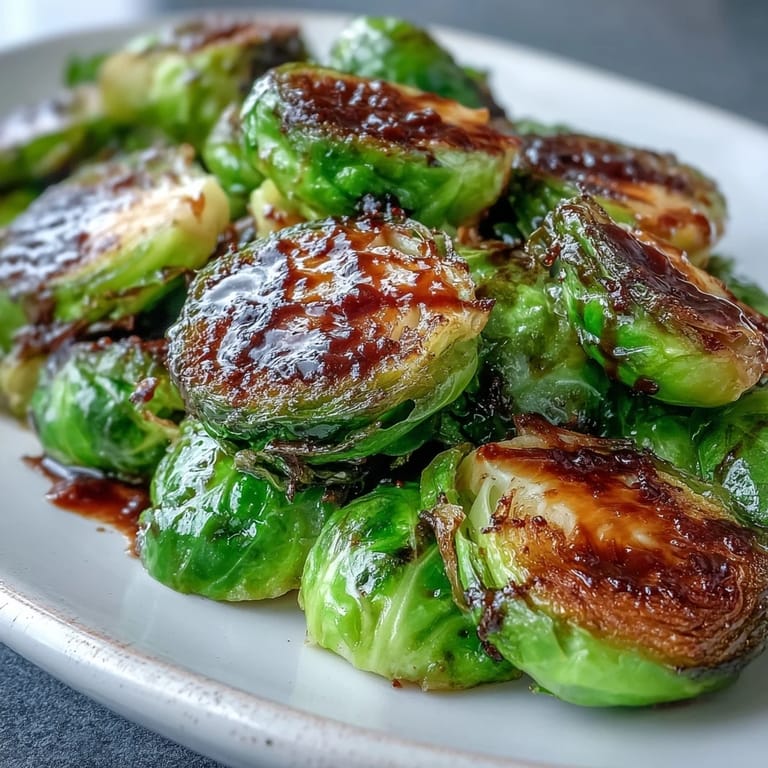
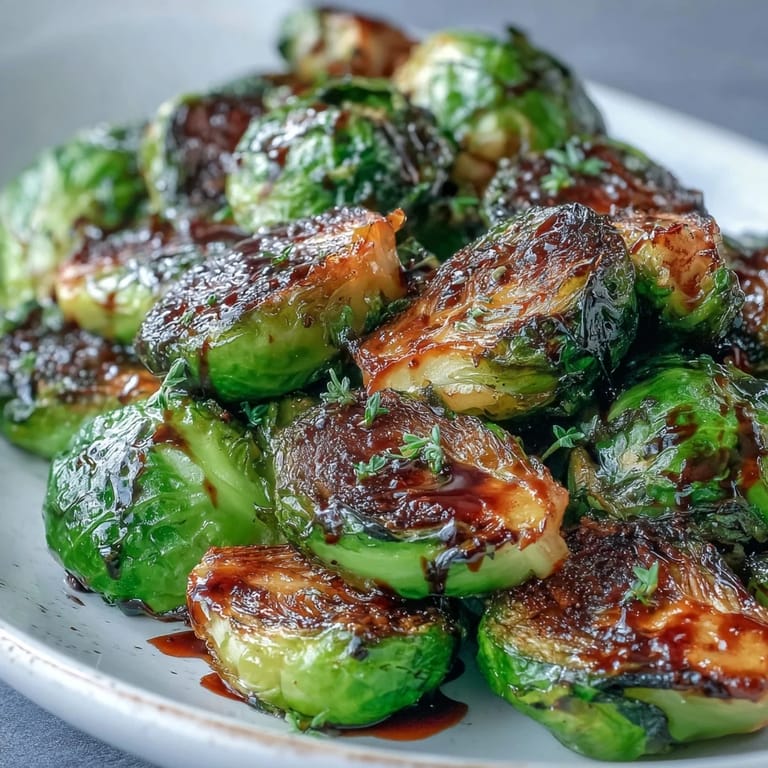
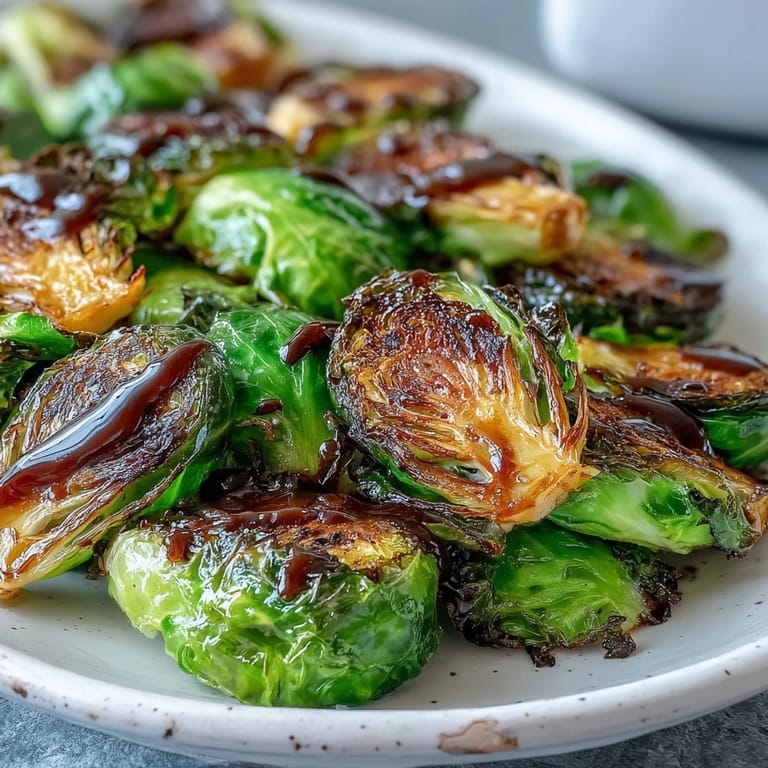
- Arrange the hot sprouts on a serving platter and drizzle generously with the reduction. Serve immediately while everything is still warm and the flavors are bright.
 Save
Save There's something about serving food that started as individual ingredients and becomes something greater than the sum of its parts. This dish taught me that even the most humble vegetable deserves intention and heat.
Variations That Work
I've experimented with adding parmesan cheese, toasted walnuts, or even a pinch of red pepper flakes to the finished dish. Each addition changes the personality without requiring you to start over. The base recipe is forgiving enough to play with.
Storage and Make-Ahead
These are best served right away while the sprouts are still warm and crispy, but you can prepare them a few hours ahead and warm them gently in a low oven before serving. The reduction can be made a day ahead and reheated just before drizzling.
Pairing Ideas and Serving Notes
Serve this alongside roasted chicken, grilled steak, or even as part of a vegetarian spread where it holds its own. It works at casual weeknight dinners and elevated occasions with equal confidence.
- Try maple syrup instead of honey for a subtly different flavor profile and vegan-friendly option.
- A sprinkle of grated Parmesan or toasted hazelnuts right before serving adds sophistication without extra cooking.
- Make extra because people will ask for seconds, and leftovers are honestly still delicious at room temperature the next day.
 Save
Save This recipe proved that sides deserve as much love as mains. Once you master it, you'll find yourself making it constantly.
Recipe FAQs
- → How do I get Brussels sprouts crispy instead of soggy?
The key is high heat (425°F) and arranging sprouts cut-side down in a single layer. This allows direct contact with the hot baking sheet, promoting caramelization. Don't overcrowd the pan—steam creates sogginess. Roasting until deeply browned, not just golden, yields the crispiest texture.
- → Can I make the balsamic reduction ahead of time?
Absolutely. The reduction keeps well in an airtight container at room temperature for up to 2 weeks. In fact, making it in advance saves time. Simmer balsamic vinegar until reduced by half—this concentrates the flavors into a thick, syrupy glaze perfect for finishing the sprouts.
- → What's the difference between balsamic reduction and glaze?
Reduction refers to pure balsamic vinegar simmered until thickened. Glaze typically includes sweeteners like honey or sugar. This recipe uses both: vinegar reduced with optional honey for extra sweetness. The result is a balanced coating that complements the sprouts' natural bitterness.
- → Can I use frozen Brussels sprouts?
Fresh sprouts work best—they caramelize more evenly and maintain better texture. Frozen sprouts contain excess moisture that inhibits browning, resulting in softer, less flavorful results. If using frozen, thaw and pat thoroughly dry before roasting, though expect less crispiness.
- → How long does this dish keep as leftovers?
Store in an airtight container in the refrigerator for up to 3 days. Reheat in a 350°F oven for 10-15 minutes to restore some crispiness, or microwave briefly. The balsamic coating may soften the texture slightly upon storage, but flavors continue developing.
- → What can I add for extra flavor?
Try topping with grated Parmesan, toasted walnuts or pecans, crispy bacon bits, or dried cranberries. Fresh herbs like thyme or rosemary add earthiness. A splash of lemon juice brightens the finish, while red pepper flakes provide subtle heat that contrasts the sweet glaze.