 Save
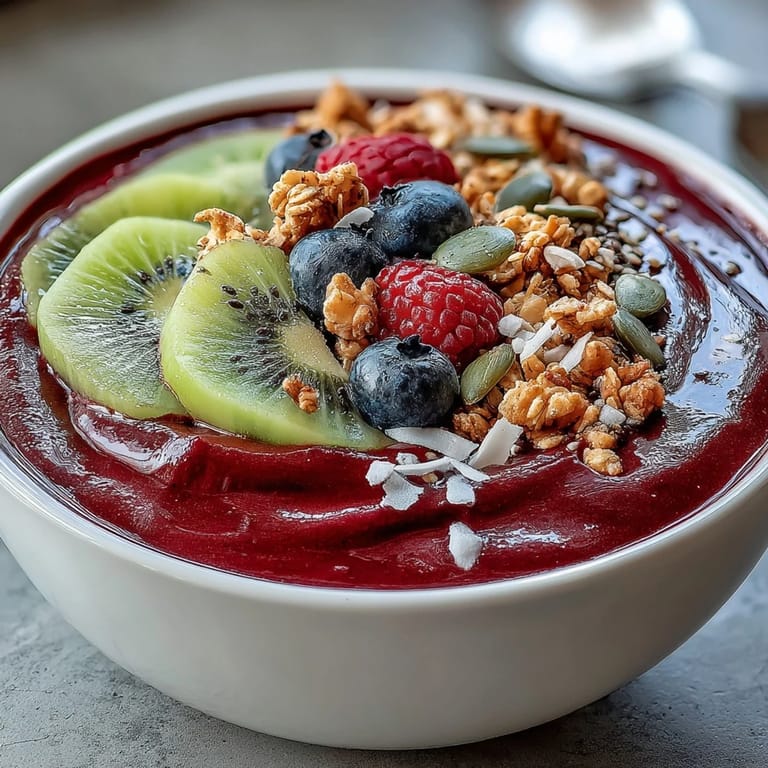
Save I discovered the magic of beet and berry bowls on a grey Tuesday morning when my blender decided to work again after months of sitting unused. The kitchen was quiet, the light was soft, and I had exactly one sad beetroot and a bag of frozen berries staring at me from the fridge. What came out was so shockingly pink and vibrant that I actually laughed—like I'd somehow bottled up summer in a bowl. My roommate walked in mid-blend and we both just stood there, slightly amazed that something so simple could look like edible art.
I made this for a friend who was going through a rough patch, and she showed up to breakfast looking absolutely defeated. I handed her this glowing pink bowl with all the crunchy toppings, and I watched her face shift—not into pure happiness, but into this moment of gentleness with herself. She ate slowly, noticed the flavors, said the crunch made it feel intentional. Sometimes the most nourishing thing isn't the nutrients on paper, it's taking five minutes to do something thoughtfully.
Ingredients
- Cooked beetroot (1 small, about 80g): The star that makes everything pink and sneaks in natural sweetness without the sugar crash—I learned to cook extras on Sunday specifically for this.
- Frozen mixed berries (1 cup, 150g): Frozen is actually better than fresh here because they're picked at peak ripeness and won't dilute your bowl like melting fresh ones.
- Ripe banana (1): This is the texture keeper; it makes everything creamy without needing a ton of yogurt, which I discovered after adding way too much once.
- Unsweetened almond milk (1/2 cup, 120ml): Start conservative and add more if your blender is struggling—I've learned the hard way that too much liquid turns this into a smoothie drink instead of a spoonable bowl.
- Greek or coconut yogurt (1/2 cup, 120g): The anchor that keeps things thick and protein-rich; plain is essential because flavored yogurt fights with the berry notes.
- Chia seeds (1 tablespoon): Tiny nutrition bombs that absorb liquid and add this satisfying texture—I always add these before blending so they integrate.
- Maple syrup or honey (1 tablespoon, optional): The berries and beets are already sweet, so taste first before committing to this; I often skip it entirely.
- Granola (1/2 cup, 40g): Choose something you'd actually eat by itself because it's your textural hero here; check the label for gluten or nut concerns.
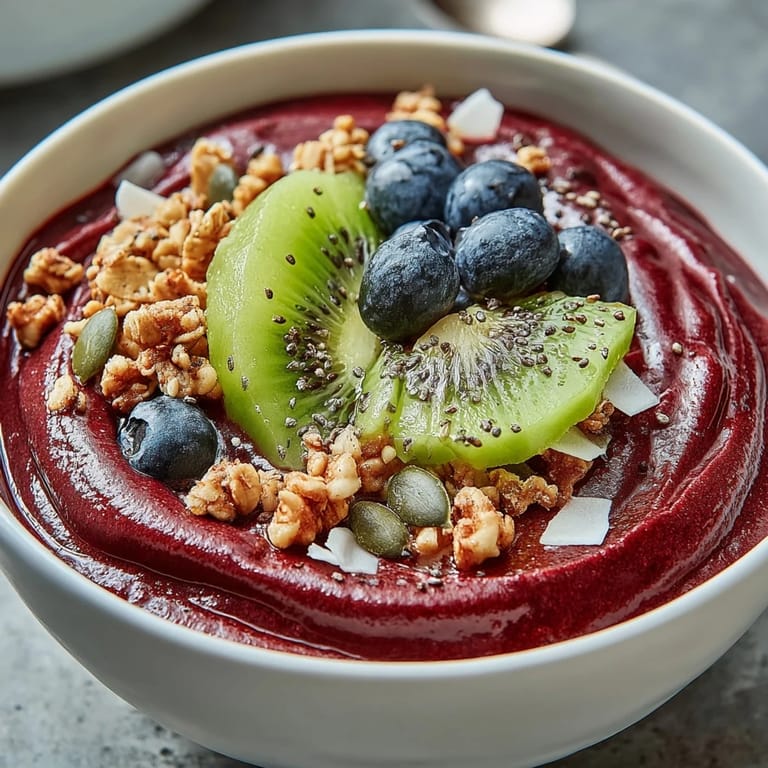
- Fresh berries, kiwi, pumpkin seeds, shredded coconut, mint (assorted for topping): This is where you get creative and use what makes you happy—I've built entirely different bowls depending on what farmers market scored I've made.
Tired of Takeout? 🥡
Get 10 meals you can make faster than delivery arrives. Seriously.
One email. No spam. Unsubscribe anytime.
Instructions
- Gather and prep your blender station:
- Pull everything from the fridge and have it ready to go—this isn't a mindless process, and I've found that having my space organized makes the whole thing feel less rushed and more intentional.
- Load the blender strategically:
- Beetroot, berries, banana, milk, yogurt, and chia seeds go in together, then blend until completely smooth and creamy. Scrape down the sides if things get stubborn, and remember that you're aiming for soft-serve consistency, not soup.
- Taste and adjust:
- This is your moment to check if you need sweetness or more liquid—better to discover this now than after you've already poured it out.
- Divide between two bowls:
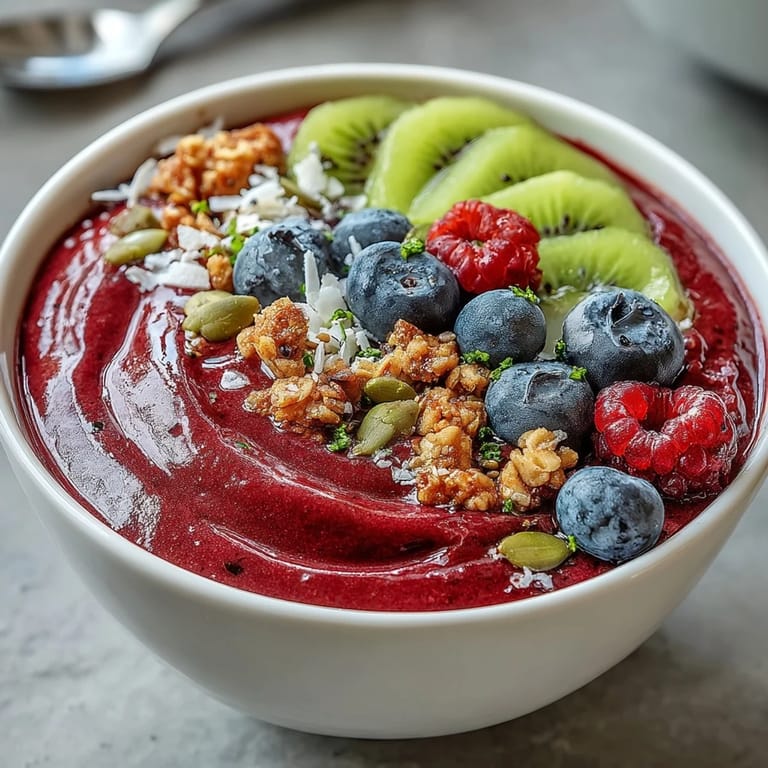
- Pour the blended mixture evenly into serving bowls, which usually gives you this gorgeous sunset-pink base that's already half the appeal.
- Top with intention:
- Scatter granola across the surface, then arrange your fresh fruit, seeds, coconut, and mint in a way that feels balanced to you—this isn't rigid, it's your bowl.
- Eat immediately:
- Serve right away while the granola is still crunchy and everything is cool; the moment you let it sit, the toppings start softening and the magic changes.
 Save
Save There's something about eating with your spoon instead of drinking through a straw that changes the experience entirely. It forces you to slow down, to notice the different layers and textures, to actually taste instead of just consume. That's when I realized this bowl wasn't really about the nutrients or the Instagram moment—it was about creating a small, deliberate pause in the day.
The Science of the Perfect Pink
Beetroot is basically nature's food coloring, but it's doing so much more than just making things pretty. The betalains (those are the pigments) are antioxidants that don't survive high heat, which is why we use cooked beets that have been allowed to cool rather than blending raw ones—cooked beets blend into a silkier texture anyway, and you get color without all the earthiness that makes some people recoil. The pink you see is actually quite stable once blended because of the yogurt's pH, so your bowl won't fade to sad brown by the time you've finished arranging your toppings.
Building Your Own Variations
Once you understand the framework of this bowl, it becomes less of a recipe and more of a language you speak. The base is negotiable—swap berries for mango, add spinach if you're feeling virtuous, use regular milk if that's what's in your fridge. The only rule I've discovered through experimentation is that you need something creamy, something frozen, something that makes it pink or purple or interesting, and something cold to drink it with. I've made versions with pomegranate seeds and pistachios in December, with peaches and granola in August, and honestly, they're all versions of the same comforting idea.
Making It Work for Your Dietary Needs
This bowl is almost aggressively accommodating because the base formula doesn't actually require dairy or animal products to work. Greek yogurt is traditional, but coconut yogurt or even blended silken tofu creates the same creamy effect. Granola might have gluten or tree nuts depending on the brand, but there are versions of both that don't, or you can make your own. The thing I've learned is that accommodating different diets doesn't mean creating separate recipes—it means understanding that swaps are about achieving the same texture and flavor, not about restriction.
- For dairy-free or vegan: Use coconut, cashew, or oat yogurt in place of Greek yogurt.
- For gluten-free: Check your granola label or make your own with certified GF oats and your favorite nuts.
- For extra protein: Add a scoop of vanilla or berry protein powder to the blender before mixing.
 Save
Save This bowl has become my answer to mornings when I need to feel like I'm taking care of myself, even when everything else feels chaotic. It takes ten minutes and makes you feel like you've done something worthwhile before the day even really starts.
Recipe FAQs
- → Can I use raw beetroot instead of cooked?
While cooked beetroot blends more smoothly and has a sweeter, milder flavor, you can use raw beetroot if preferred. Peel and grate it first, then blend thoroughly. Raw beet has a stronger earthy taste and slightly crunchier texture.
- → How can I make this bowl higher in protein?
Add a scoop of vanilla or unflavored protein powder to the blender, use Greek yogurt instead of coconut yogurt, or stir in a tablespoon of hemp hearts after blending. You can also increase the chia seeds to two tablespoons for an extra protein boost.
- → Can I prepare this in advance?
The smoothie base can be blended and stored in the refrigerator for up to 24 hours, though it may thicken considerably. Add a splash of milk to thin before serving. However, toppings are best added fresh just before eating to maintain their crunch.
- → What milk alternatives work best?
Unsweetened almond milk provides a neutral flavor that lets the beet and berry shine. Oat milk adds creaminess, soy milk offers extra protein, and coconut milk creates a richer texture. Choose based on your dietary needs and flavor preferences.
- → How can I adjust the sweetness?
The ripeness of your banana and berries determines natural sweetness. If needed, add maple syrup, honey, or dates while blending. For a lower-sugar version, omit the sweetener entirely—the berries provide plenty of natural sweetness.
- → What other toppings work well?
Sliced almonds, walnuts, cacao nibs, hemp seeds, or sunflower seeds add crunch. Fresh banana slices, mango chunks, pomegranate arils, or sliced peaches enhance fruit variety. A dollop of nut butter or drizzle of almond butter adds richness.