 Save
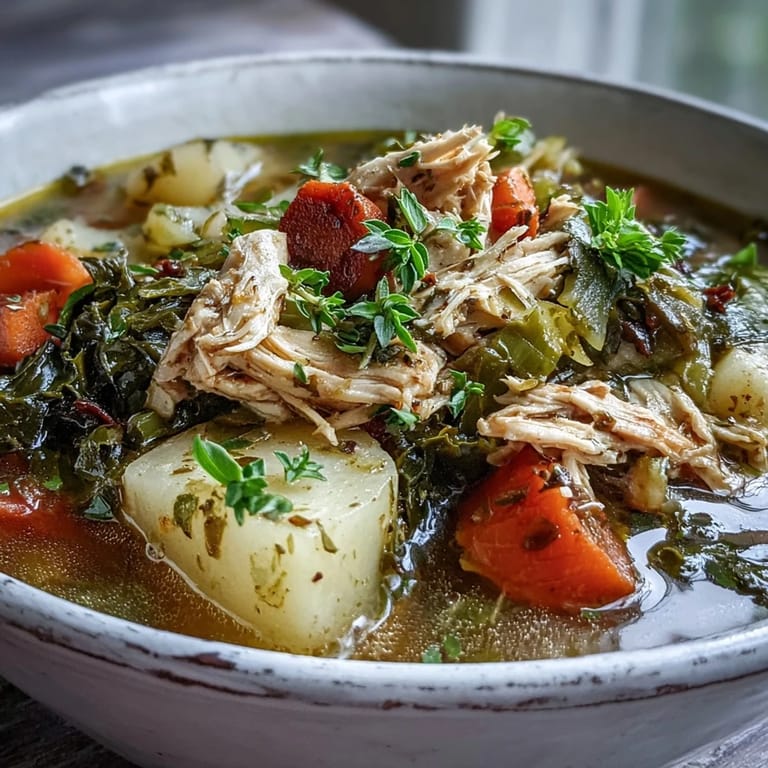
Save My neighbor stopped by one chilly October afternoon with a bundle of fresh collard greens from her garden, and I realized I had chicken in the freezer and potatoes in the pantry. Within an hour, the whole house smelled like comfort—that warm, savory steam rising from a pot that seemed to know exactly what we needed. There's something about making soup that feels less like cooking and more like creating shelter in a bowl.
I made this for my sister during her first week back from a hospital stay, and watching her ask for seconds told me everything I needed to know. The soup wasn't fancy or complicated, but it felt right—nourishing in that way that goes beyond nutrition facts.
Ingredients
- Boneless, skinless chicken breasts or thighs: I've learned thighs stay moister and more forgiving, but breasts work fine if that's what you have—just don't overcook them past that 20-minute mark.
- Yellow onion, carrots, and celery: This holy trinity is your foundation, and taking the time to dice them evenly means they'll soften at the same pace.
- Potatoes: Medium-sized pieces mean they soften in time with everything else; too small and they disappear, too large and they stay stubborn.
- Collard greens: Removing those woody stems is non-negotiable, and chopping the leaves roughly keeps them from turning into paste.
- Garlic cloves: Fresh minced garlic makes a real difference here; the dried stuff gets lost in the shuffle.
- Low-sodium chicken broth: This is your blank canvas—taste your broth before adding salt, since some brands are already fairly salty.
- Bay leaf, thyme, and oregano: These dried herbs build a subtle backbone; fresh herbs can overwhelm a simple broth.
- Olive oil: Two tablespoons is just enough to soften the vegetables without making the soup greasy.
Tired of Takeout? 🥡
Get 10 meals you can make faster than delivery arrives. Seriously.
One email. No spam. Unsubscribe anytime.
Instructions
- Soften your base:
- Heat the olive oil in a large soup pot over medium heat, then add the diced onion, carrots, and celery. You'll know it's ready when the kitchen fills with that sweet vegetable aroma and everything looks translucent at the edges, usually about 5 to 6 minutes.
- Wake up the garlic:
- Stir in the minced garlic and let it toast for just one minute—any longer and it can turn bitter, any shorter and it doesn't release its perfume.
- Build your soup base:
- Add the chicken, potatoes, broth, and all your seasonings at once. The liquid should mostly cover everything; if not, add a splash more broth.
- Get to a simmer:
- Bring everything to a boil first, then reduce the heat so you're at a gentle, steady simmer rather than a rolling boil. The chicken will cook through in about 20 minutes this way.
- Shred and return:
- Once the chicken is cooked through (it should shred easily with two forks), remove it from the pot and pull it into tender pieces. This step takes maybe three minutes and is oddly satisfying.
- Add the greens:
- Return the shredded chicken to the pot and stir in the chopped collard greens. They'll seem to take up a lot of space, but they'll wilt down beautifully in 10 to 15 minutes.
- Taste and adjust:
- Fish out the bay leaf and taste the soup. Seasons shift as things cook down, so this is your moment to add more salt, pepper, or even a squeeze of lemon if it feels flat.
- Serve it warm:
- Ladle into bowls and let people come to the table—good soup waits for no one.
 Save
Save  Save
Save My kids, who normally eye green vegetables with suspicion, have taken to eating this soup without complaint. I think it's because the greens are so tender they stop feeling like something to resist and just become part of the warmth.
Why This Soup Works
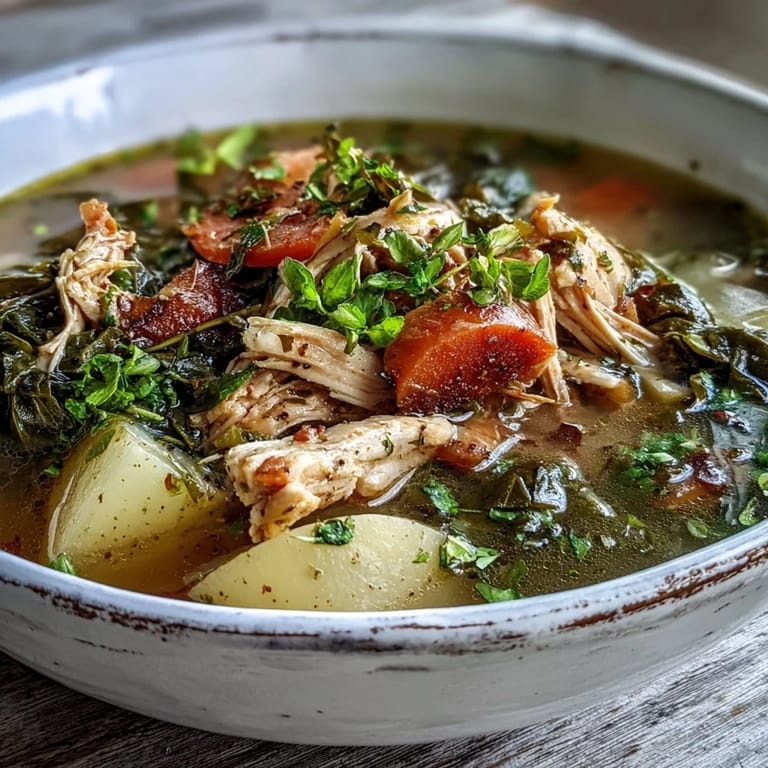
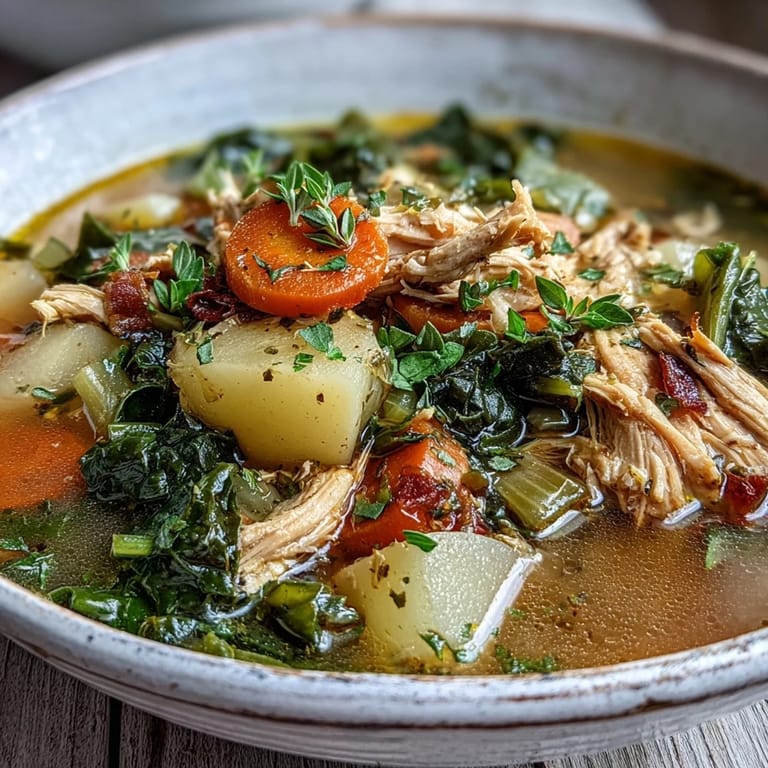
The real magic here is timing—everything hits tenderness at roughly the same moment, so you're not fishing out carrots that are still firm or collard greens that have turned into mush. The chicken shreds while still in the pot's residual heat, which keeps it moist, and the potatoes break down slightly at the edges, thickening the broth just enough without needing any cream or flour.
Variations That Actually Work
I've swapped kale for collard greens on nights when that's what I had, though I find kale turns more delicate and breaks apart easier. Swiss chard works too, and if you add white beans or corn as the original notes suggest, you're looking at something heartier that stretches the servings further. One winter I added a tiny pinch of cayenne and a squeeze of lime juice at the very end, and my husband asked if we could make it that way every time.
Make It Your Own
This recipe is a starting point, not a strict rule. The proportions are forgiving enough that if you have extra vegetables or less broth, the soup adapts. I've made it with rotisserie chicken on weeknights when time vanished, and I've built it from scratch on quiet Sundays when I had time to watch things unfold.
- A splash of lemon juice or cider vinegar at the end brightens everything without making it taste sour.
- Fresh herbs like parsley or dill scattered on top just before serving add a moment of freshness.
- If you're cooking for someone recovering or feeling under the weather, this soup never disappoints.
 Save
Save 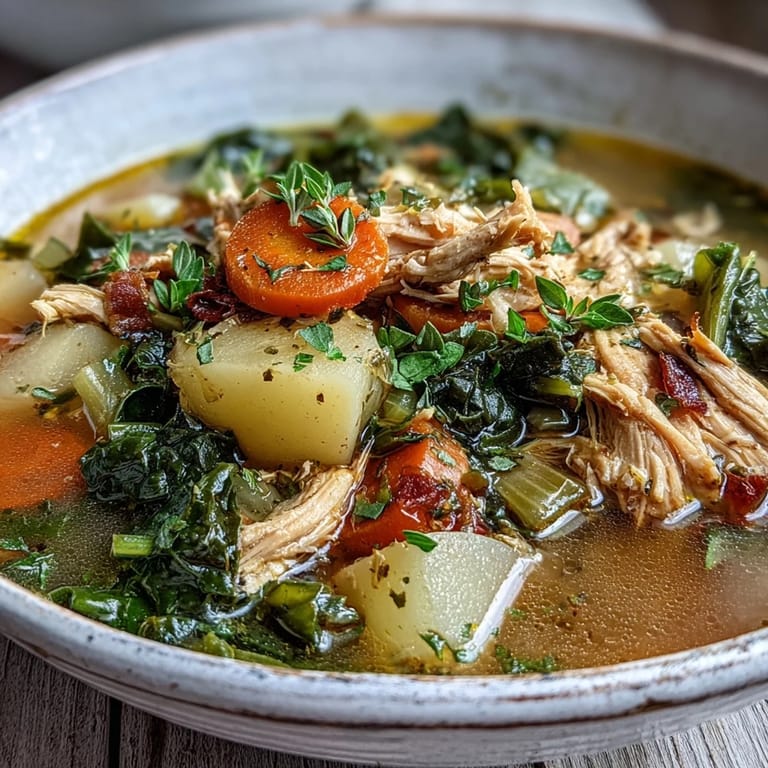 Save
Save This soup has become my quiet answer to almost any season or mood—when someone's sick, when the weather turns cold, when the garden suddenly overflows with greens. It's the kind of dish that asks for nothing fancy but somehow makes everything feel a little softer and more manageable.
Recipe FAQs
- → Can I use chicken thighs instead of breasts?
Yes, chicken thighs work wonderfully and add extra flavor and moisture. Use 3 boneless, skinless thighs in place of 2 breasts.
- → What can I substitute for collard greens?
Kale, Swiss chard, or spinach are excellent alternatives. Kale and chard have similar cooking times, while spinach wilts faster so add it in the last 5 minutes.
- → How do I store leftovers?
Store in an airtight container in the refrigerator for up to 4 days. The flavors deepen overnight. Reheat gently on the stovetop, adding a splash of broth if needed.
- → Can I freeze this soup?
Yes, this soup freezes well for up to 3 months. Cool completely before transferring to freezer-safe containers. Thaw overnight in the refrigerator and reheat on the stovetop.
- → How can I make this soup heartier?
Add cooked white beans, chickpeas, or corn for extra fiber and texture. You can also include additional vegetables like zucchini or green beans for more substance.
- → What type of potatoes work best?
Yukon Gold or red potatoes hold their shape well during simmering. Russet potatoes work too but may break down slightly, creating a thicker broth.