 Save
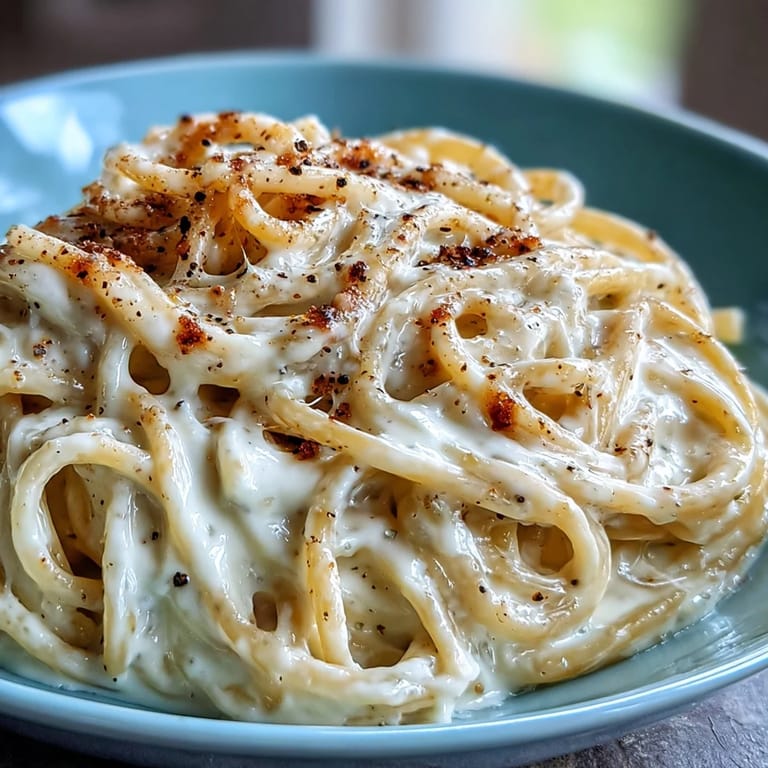
Save My upstairs neighbor came down one night with a hunk of Pecorino and a pepper grinder, insisting I stop what I was doing. She'd just returned from Rome and wanted to show me what she called "real pasta," which turned out to be three ingredients and a wooden spoon. I stood there skeptical, watching her toss hot spaghetti in a pan with nothing but cheese, pepper, and starchy water until it turned into something silky and addictive. That night changed how I thought about cooking entirely.
I made this for my brother the week he moved into his first apartment with nothing but a single pot and a dream. We sat on his floor eating it straight from the pan, and he kept saying he couldn't believe something this good came from his own stove. He still texts me every few months to tell me he made it again, usually with a photo of his plate and a poorly lit kitchen in the background. It's become his signature dish without him even realizing it.
Ingredients
- Spaghetti or tonnarelli (400 g): Tonnarelli is the traditional choice in Rome, thicker and more rustic, but spaghetti works beautifully and is easier to find.
- Pecorino Romano cheese (120 g, finely grated): This is the soul of the dish, sharp and salty with a slight funk that makes everything come alive, so buy a good wedge and grate it yourself.
- Whole black peppercorns (2 tsp, freshly cracked): Toasting them in the pan before anything else releases oils that turn simple pepper into something almost floral and warm.
- Kosher salt (1 tsp for pasta water): Don't skip salting the water generously, it's your only chance to season the pasta from the inside out.
- Unsalted butter (1 tbsp, optional): Purists will scoff, but a little butter at the end adds a glossy richness that makes the sauce cling even better.
Tired of Takeout? 🥡
Get 10 meals you can make faster than delivery arrives. Seriously.
One email. No spam. Unsubscribe anytime.
Instructions
- Boil the pasta:
- Bring a large pot of water to a rolling boil, salt it well, then cook the spaghetti until it still has a slight bite, about a minute less than the package says. Before draining, scoop out at least 1½ cups of that starchy, cloudy pasta water, it's liquid gold for building the sauce.
- Toast the pepper:
- While the pasta bubbles away, heat a large dry skillet over medium heat and add the cracked peppercorns, shaking the pan until they smell toasty and fragrant, usually about a minute. This step wakes up the pepper and makes it the star it deserves to be.
- Build the base:
- Pour 1 cup of the hot reserved pasta water into the skillet with the toasted pepper, then lower the heat. Let it simmer gently so the pepper infuses the water with its bite.
- Toss the pasta:
- Add the drained spaghetti directly into the skillet and toss it around, letting it drink up some of that peppery water. The pasta should glisten and start to get a little sticky.
- Add the cheese:
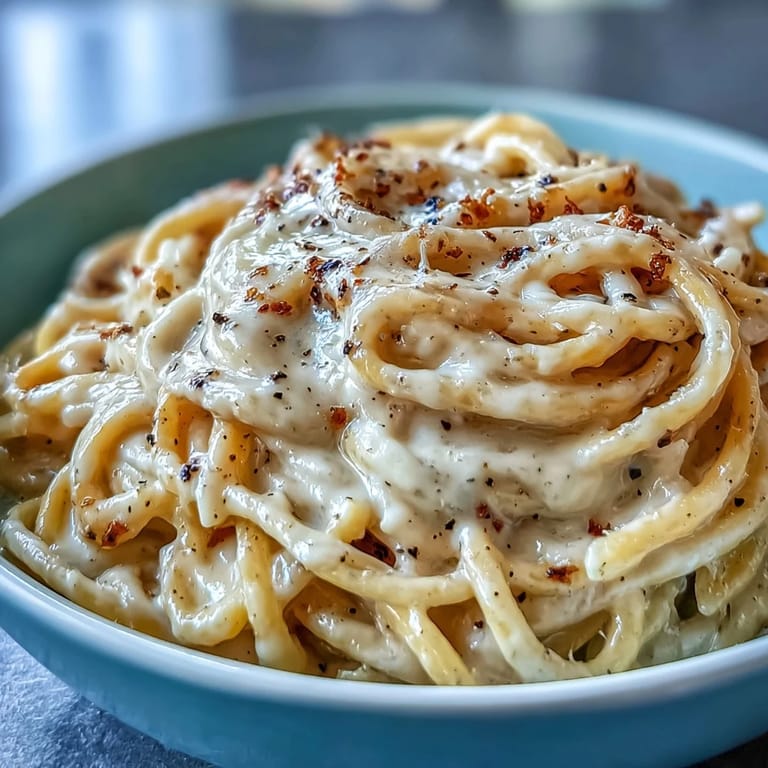
- Pull the pan off the heat and start sprinkling in the grated Pecorino, tossing constantly with tongs or a fork to keep it from clumping. Add more reserved pasta water a splash at a time if it looks tight, the goal is a creamy, flowing sauce that coats every strand.
- Finish and serve:
- If you're using butter, toss it in now and stir until it melts into the sauce. Plate immediately, top with extra cheese and a generous crack of pepper, and eat it while it's still steaming.
 Save
Save One rainy evening, I taught this recipe to a friend who swore she couldn't cook. She called me halfway through, panicked because her sauce looked like shredded cheese floating in water, and I talked her through adding more pasta water and tossing harder. When it finally came together, she sent me a voice memo of herself laughing in disbelief. She makes it for dates now, and every time I see her she thanks me like I handed her a superpower.
Choosing Your Pasta
Tonnarelli is what you'll find in Rome, a square-cut noodle that's slightly thicker than spaghetti and grabs onto the sauce with more surface area. If you can find it fresh or dried at an Italian market, it's worth trying at least once. Spaghetti is the easier substitute and still delivers all the right texture, just make sure it's a good brand with a rough surface that holds the cheese.
Getting the Sauce Right
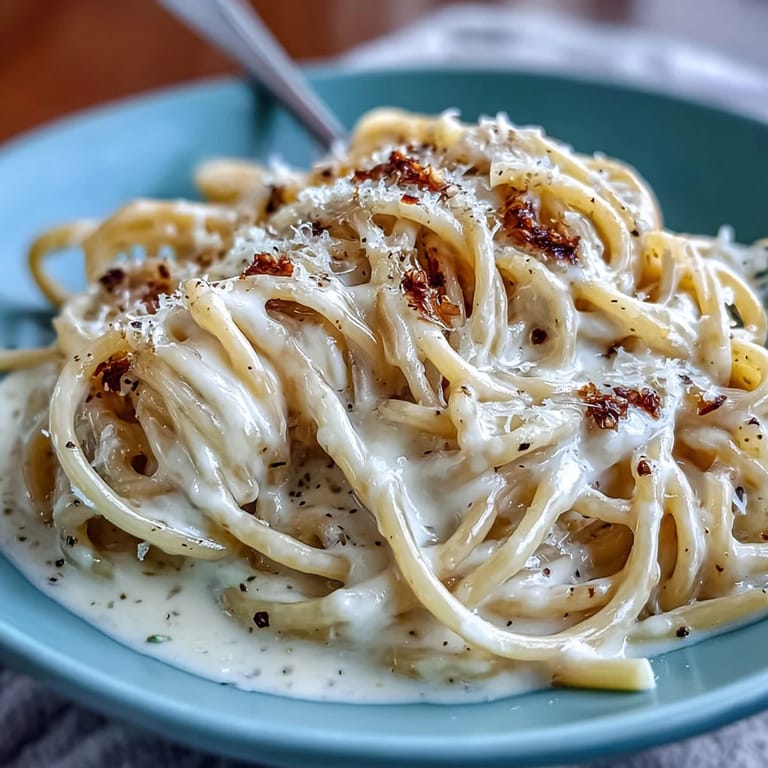
The magic happens when starchy pasta water, fat from the cheese, and vigorous tossing combine to form an emulsion that coats the noodles like cream. It's not about adding cream or oil, it's about manipulating what's already there through heat control and movement. If the sauce looks broken, don't panic, just add a splash of water and keep tossing until it smooths out again.
Serving and Storing
Cacio e pepe is best eaten the moment it's done, straight from the pan if you're feeling casual. Leftovers don't really hold up since the sauce tightens and loses its creaminess in the fridge, but you can revive it the next day with a splash of water or milk in a hot pan. I usually just make exactly what I need and save the leftover cheese and pepper for round two later in the week.
- Serve it in warm bowls so the sauce doesn't cool and thicken too fast.
- Pair it with a simple green salad dressed in lemon and olive oil to cut through the richness.
- A crisp white wine like Frascati or Verdicchio balances the salty, peppery bite beautifully.
 Save
Save There's something quietly powerful about mastering a dish this simple, knowing you can pull off something this satisfying with almost nothing. Every time I make it, I think about my neighbor and that first bite that tasted like proof that good food doesn't have to be complicated.
Recipe FAQs
- → What type of pasta works best for Cacio e Pepe?
Tonnarelli is the traditional choice, but spaghetti works excellently as well. The key is cooking it to just al dente so it absorbs the peppery water while maintaining texture.
- → Why is my sauce clumpy instead of creamy?
Clumping occurs when cheese is added to water that's too hot or added too quickly. Remove the skillet from heat before adding cheese, and sprinkle it gradually while tossing vigorously to create a smooth emulsion.
- → Can I substitute Parmesan for Pecorino Romano?
While Pecorino Romano's sharp, salty flavor is traditional and preferred, Parmigiano-Reggiano can work in a pinch. However, the dish will taste milder and less authentically Roman.
- → How important is freshly cracked black pepper?
Extremely important. Pre-ground pepper lacks the aromatic oils and bold flavor that define this dish. Toast whole peppercorns and crack them fresh for maximum impact and authentic taste.
- → Why do I need to reserve pasta water?
Starchy pasta water is crucial for creating the creamy sauce. It helps emulsify the cheese and pepper, binding them into a silky coating rather than a separated, greasy mixture.
- → Is butter traditional in Cacio e Pepe?
Traditional Roman versions typically omit butter, relying solely on cheese and pasta water for creaminess. However, a small amount can help stabilize the emulsion for beginners.