 Save
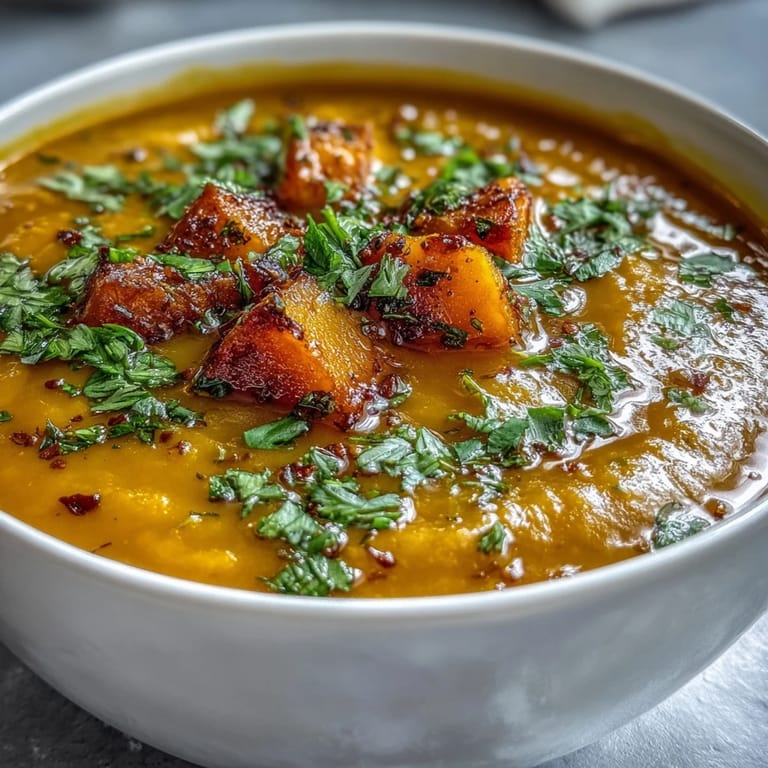
Save There's something about October that makes me crave this soup—the kind of day when the kitchen windows fog up and you can smell the sweetness of roasted squash the moment it hits the oven. I stumbled onto this combination almost by accident, really, when I had a lonely butternut squash sitting on my counter and a half-emptied bag of red lentils in the pantry. The spices just felt right together, and what emerged was this deeply comforting bowl that somehow tastes like it took hours when it barely takes an hour. It's become my go-to when I want something nourishing without the fuss.
I made this for my sister during one of those surprise visits where she showed up with no warning and a hankering for something homey. I had fifteen minutes to shop and forty to cook, and when I ladled that golden soup into bowls with a sprinkle of cilantro, she closed her eyes with the first spoonful—the kind of reaction that reminds you why cooking for someone matters at all.
Ingredients
- Butternut squash (1 medium, about 900 g): Roasting it separately caramelizes the edges and concentrates the sweetness, which is the secret to why this soup tastes richer than the ingredient list suggests.
- Red lentils (150 g or 3/4 cup): These are smaller and cook faster than brown or green lentils, and they dissolve into the broth creating natural creaminess.
- Carrots (2 medium): They soften into the background, adding subtle sweetness and body to the broth.
- Onion (1 large): Diced and sautéed first, it builds the flavor foundation that everything else sits on.
- Garlic (2 cloves): Minced and bloomed with the spices, it prevents that raw edge and adds depth.
- Ground cumin, coriander, turmeric, cinnamon (1 tsp, 1/2 tsp, 1/2 tsp, 1/4 tsp): These warm spices are the soul of the soup—toast them for just a minute to wake them up, but don't overdo it or they'll turn bitter.
- Chili flakes (1/4 tsp, optional): A whisper of heat that rounds out the sweetness without dominating.
- Olive oil (2 tbsp): Split between roasting the squash and sautéing the aromatics.
- Vegetable broth (1.2 liters or 5 cups): Use something you'd actually drink on its own—good broth makes all the difference.
- Lemon juice (from 1/2 lemon): Added at the end, it brightens everything and keeps the soup from tasting one-dimensional.
- Fresh cilantro or parsley: The finishing touch that turns a good soup into one people remember.
Tired of Takeout? 🥡
Get 10 meals you can make faster than delivery arrives. Seriously.
One email. No spam. Unsubscribe anytime.
Instructions
- Get the oven ready and prep your squash:
- Preheat your oven to 200°C (400°F). Peel and cube your butternut squash—I find a sharp knife and a steady cutting board make this less of a wrestling match. Toss the cubes with 1 tablespoon of olive oil, a pinch of salt, and pepper, then spread them on a baking sheet in a single layer.
- Roast until golden:
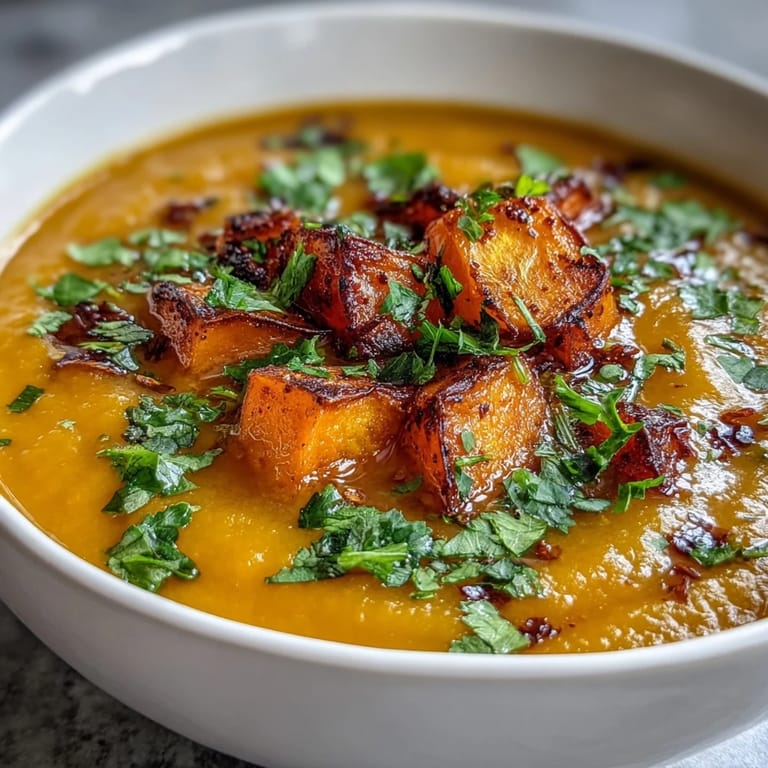
- Pop the squash into the oven for about 25 minutes, until the edges are caramelized and golden and a fork slides through easily. You'll know it's ready when your kitchen smells like autumn.
- Build the flavor base:
- While the squash roasts, heat the remaining tablespoon of olive oil in a large pot over medium heat. Add your diced onion and sliced carrots, stirring occasionally, until they soften and the onion turns translucent—this takes about 5 minutes.
- Bloom your spices:
- Add the minced garlic, cumin, coriander, turmeric, cinnamon, and chili flakes if you're using them. Stir constantly for about a minute—you'll smell the spices come alive, which is your signal they're doing their job and not burning.
- Add the lentils and liquids:
- Stir in your rinsed red lentils, coating them in that fragrant oil, then pour in your vegetable broth. Bring everything to a boil, then reduce the heat and let it simmer gently for about 15 minutes, until the lentils have completely softened and started to break down.
- Combine and blend:
- Once the squash comes out of the oven, add it to the pot. This is where you decide: use an immersion blender to make it silky smooth, or blend just half of it if you like some texture. Blending smooth gives you that restaurant-quality finish; leaving it slightly chunky feels more homey.
- Brighten and finish:
- Stir in the lemon juice, then taste and adjust the salt and pepper—this is your moment to make it exactly how you like it. A pinch more salt can wake up the whole bowl.
- Serve with intention:
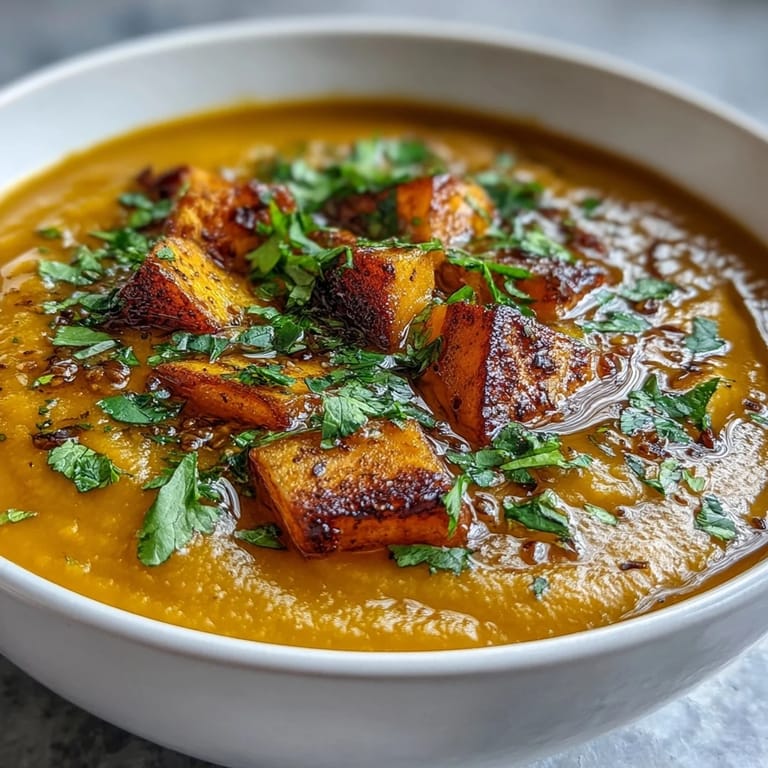
- Ladle the soup into bowls and top with a handful of fresh cilantro or parsley, letting the green contrast against that warm golden color.
 Save
Save 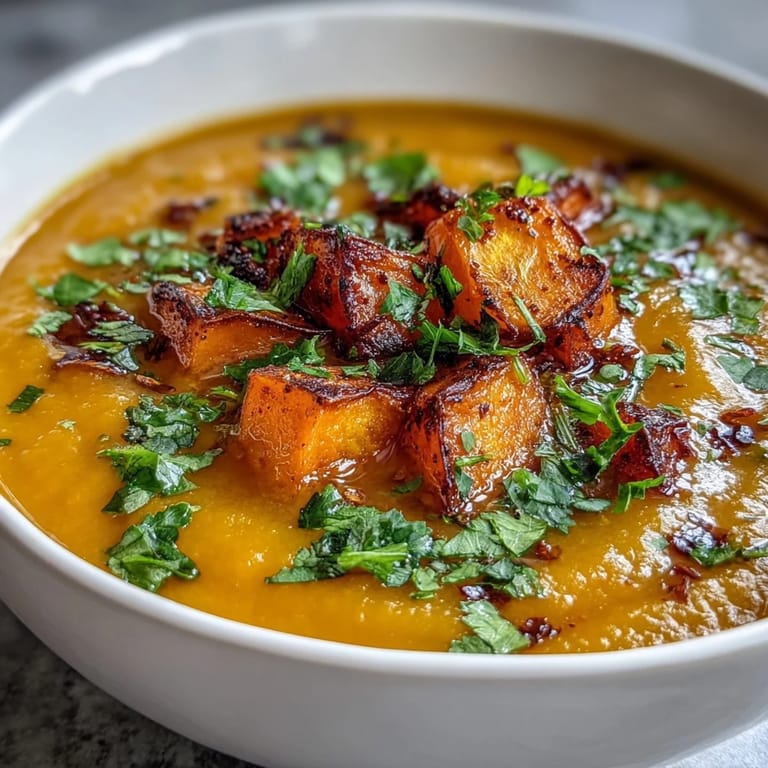 Save
Save My favorite moment with this soup came on a cold evening when a friend arrived tired from a long day, and I handed her a bowl without asking. She didn't say much at first, just sat at the kitchen counter and ate slowly, and by the end she had this calm expression that had nothing to do with the weather outside. Food that heals quietly is worth making again and again.
The Art of Roasting Your Squash
I learned early on that how you treat the squash determines whether this soup tastes ordinary or special. Roasting it separately means the natural sugars concentrate and caramelize, creating depth that simmering alone can never achieve. The key is spreading it in a single layer so each cube gets direct heat, not piled on top of itself steaming in its own moisture. I usually toss it halfway through cooking just to make sure every side gets that golden treatment.
Spice Wisdom from Trial and Error
The first time I made this soup, I added all the spices at once and ended up with something that tasted muddled and harsh. Now I understand that blooming them in hot oil for a full minute transforms them completely—the heat releases their essential oils and mellow them out. The cinnamon might seem strange in a savory soup, but it adds a warmth that ties everything together without making it taste sweet. Cumin and coriander create the backbone, turmeric gives it that golden color and earthy notes, and the chili flakes are optional but highly recommended for balance.
How to Make It Yours
This soup is forgiving enough to bend to what you have on hand or what you're craving. Some days I add a splash of coconut milk at the very end for richness, which transforms it into something almost luxurious. Other times I leave it exactly as written because sometimes simple is what the moment calls for. The beauty of this recipe is that it tastes intentional whether you follow it exactly or improvise.
- For extra creaminess, stir in a splash of coconut milk just before serving, or use the immersion blender on only half the soup for a textured, creamy combination.
- Yellow split peas work beautifully as a substitute for red lentils, though they'll need a few extra minutes of cooking time.
- Serve it with crusty bread, naan, or even over rice if you want to stretch it further—this soup is adaptable to whatever you need it to be.
 Save
Save 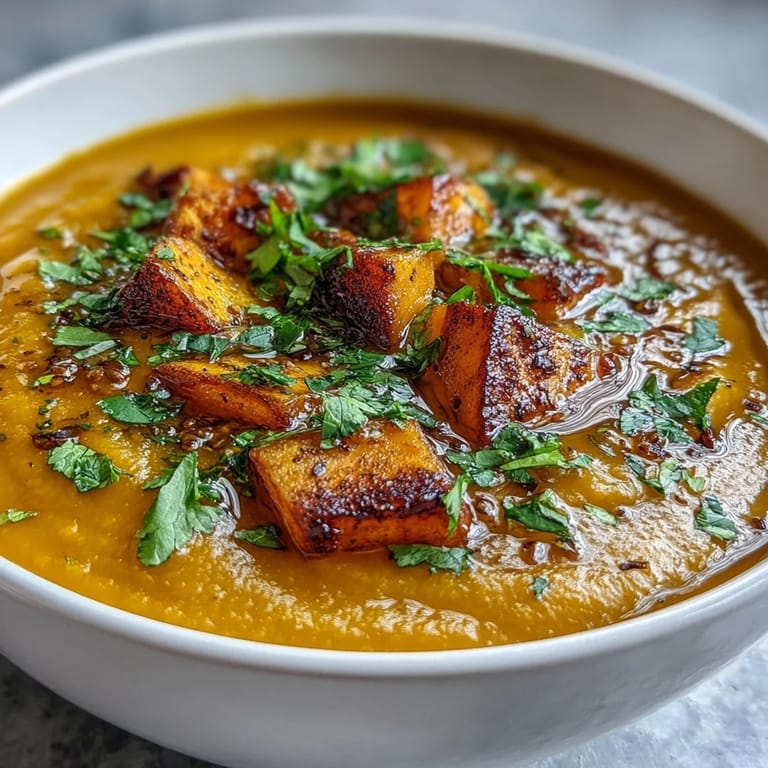 Save
Save This soup has become my quiet comfort in cooler months, the kind of dish that tastes like it took effort but honestly doesn't demand much. Make it once, and I promise you'll find yourself reaching for it again.
Recipe FAQs
- → Can I make this soup ahead of time?
Yes, this soup stores beautifully in the refrigerator for up to 5 days. The flavors actually deepen overnight. Reheat gently on the stovetop, adding a splash of broth if needed to adjust consistency.
- → What can I substitute for red lentils?
Yellow split peas work well, though they require a longer cooking time of about 25-30 minutes. Brown or green lentils can also be used but will create a different texture as they hold their shape better.
- → How do I achieve the best roasted flavor?
Ensure the butternut squash cubes are spread in a single layer on the baking sheet without crowding. This allows proper caramelization. Roasting at 200°C (400°F) for the full 25 minutes creates golden, slightly caramelized edges.
- → Can I freeze this soup?
Absolutely. Allow the soup to cool completely, then transfer to freezer-safe containers, leaving some headspace for expansion. It freezes well for up to 3 months. Thaw overnight in the refrigerator before reheating.
- → What if I don't have an immersion blender?
Transfer the soup in batches to a regular blender, filling it only halfway and removing the center cap to allow steam to escape. Cover with a kitchen towel and blend until smooth. Alternatively, leave the soup chunky for a rustic texture.
- → How can I adjust the spice level?
Start with the recommended amounts and taste before serving. Add more chili flakes gradually for heat, or incorporate cayenne pepper. For a milder version, omit the chili flakes entirely and reduce the black pepper.