 Save
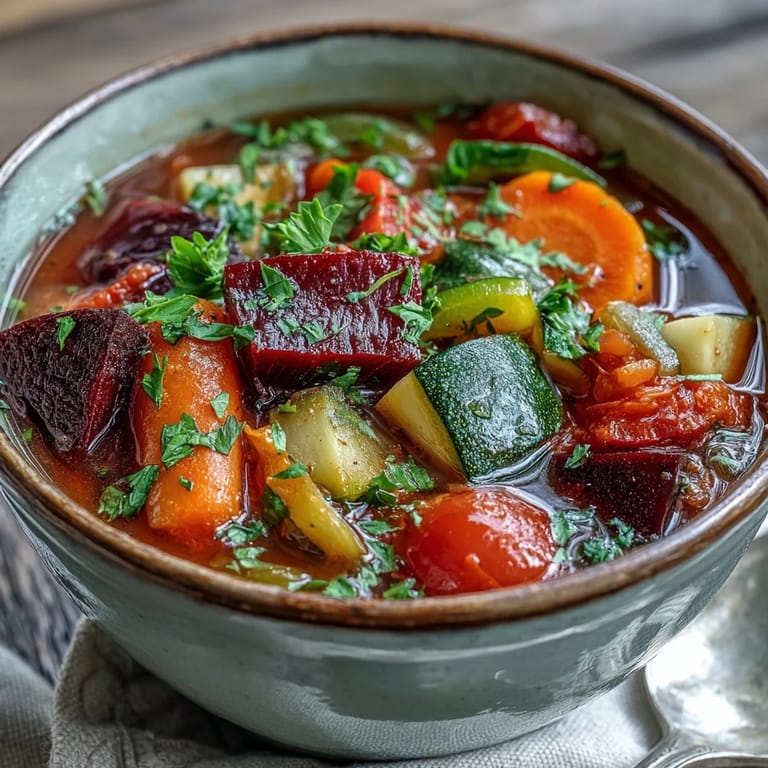
Save There's something magical about watching a pot of clear broth transform into liquid jewels as you add each vegetable—the deep purple of beetroot bleeding into golden carrots, then the bright green pepper catching the light. I discovered this soup on a grey Tuesday morning when my kitchen felt uninspired and my body needed something honest and clean. My friend Sarah had mentioned she'd been making colorful vegetable soups to feel more energized, and something about that word—colorful—stuck with me in a way that health trends usually don't.
I made this for my partner after he'd complained about feeling sluggish from eating takeout all week, and I watched his whole expression shift with that first spoonful. He went silent for a moment—not the polite kind of silence, but the kind where you're genuinely tasting something—and then he asked if I could make it again the next day. That's when I knew this wasn't just a recipe; it was something that actually mattered to him.
Ingredients
- Beetroot: This is your star player, giving the soup its deep color and earthy sweetness—peel it with gloves unless you enjoy looking like you've been in a minor accident.
- Carrots: They soften beautifully and add natural sweetness that balances the earthiness of the beetroot.
- Courgette: Keeps things light and adds a delicate sweetness; don't skip this or the soup loses its balance.
- Tomatoes: Fresh is better, but honestly, canned works in a pinch—just drain them well so you're not adding extra liquid.
- Green bell pepper: Brings freshness and a subtle bite that keeps everything from feeling heavy.
- Red onion: More delicate than yellow onion and adds a whisper of sharpness without overpowering.
- Garlic: Two cloves is right; more and you'll taste nothing else.
- Baby spinach: Optional but worth adding in the last minute—it wilts into nothing but adds nutrition and a hint of mineral-rich flavor.
- Vegetable broth: Use something you'd actually drink, not the aggressive salty stuff that masks everything.
- Olive oil: Just a tablespoon to start the flavor base without making this heavy.
- Lemon juice: This is the finishing touch that makes everything sing and prevents the soup from tasting muddled.
- Cumin, turmeric, and smoked paprika: These spices warm the soup without heat; they're grounding and sophisticated.
- Fresh parsley or coriander: Sprinkle this on at the end for brightness and aroma that smells like you actually know what you're doing.
Tired of Takeout? 🥡
Get 10 meals you can make faster than delivery arrives. Seriously.
One email. No spam. Unsubscribe anytime.
Instructions
- Start with your base:
- Heat olive oil in a large pot over medium heat and add your chopped onion and minced garlic. You'll know they're ready when the kitchen smells irresistible and the onion turns translucent, about 2-3 minutes—this is when the magic actually begins.
- Build your color:
- Add beetroot, carrots, and green pepper, stirring occasionally for 4-5 minutes. Watch how the beetroot immediately begins to bleed its purple into the oil—this isn't waste, it's flavor spreading through every molecule of the pot.
- Add the rest of the vegetables:
- Stir in courgette and tomatoes, then sprinkle in your spices (cumin, turmeric, smoked paprika, salt, and pepper). Cook for 2 minutes while the spices wake up and perfume everything around them.
- Bring it all together:
- Pour in the vegetable broth and bring everything to a boil, then immediately lower the heat and let it simmer uncovered for 20-25 minutes. The soup will deepen in color and all the vegetables will become tender enough to break apart with your spoon.
- Final flourishes:
- Stir in spinach if you're using it and let it wilt for 2 minutes, then remove from heat. Squeeze in lemon juice and taste—this is where you adjust seasoning to make it yours.
- Serve with intention:
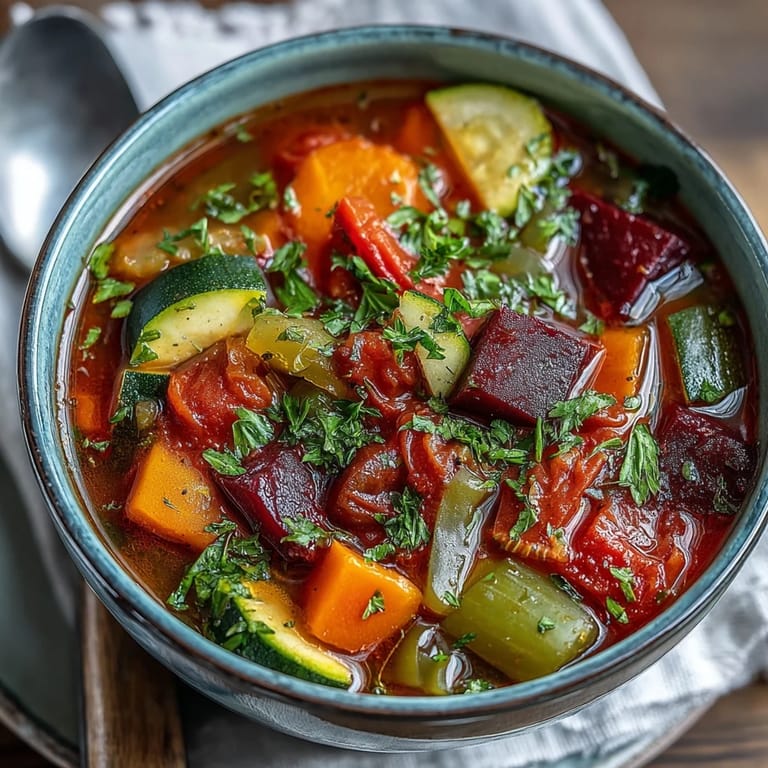
- Ladle into bowls and top with fresh parsley or coriander, letting the green catch the light against all that color underneath.
 Save
Save 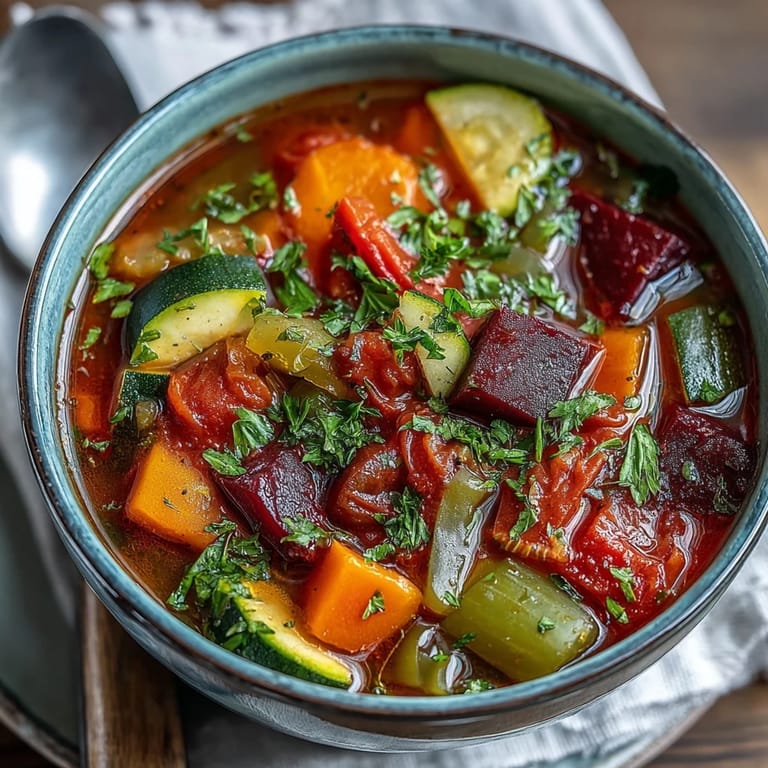 Save
Save There was an afternoon when my mother-in-law arrived unannounced while I had this soup simmering, and the whole house smelled like a farmers market and comfort at the same time. She tasted it and got a little teary—not sad, but the kind of tears that come when food reminds you that nourishment and love are sometimes the same thing.
The Rainbow Effect
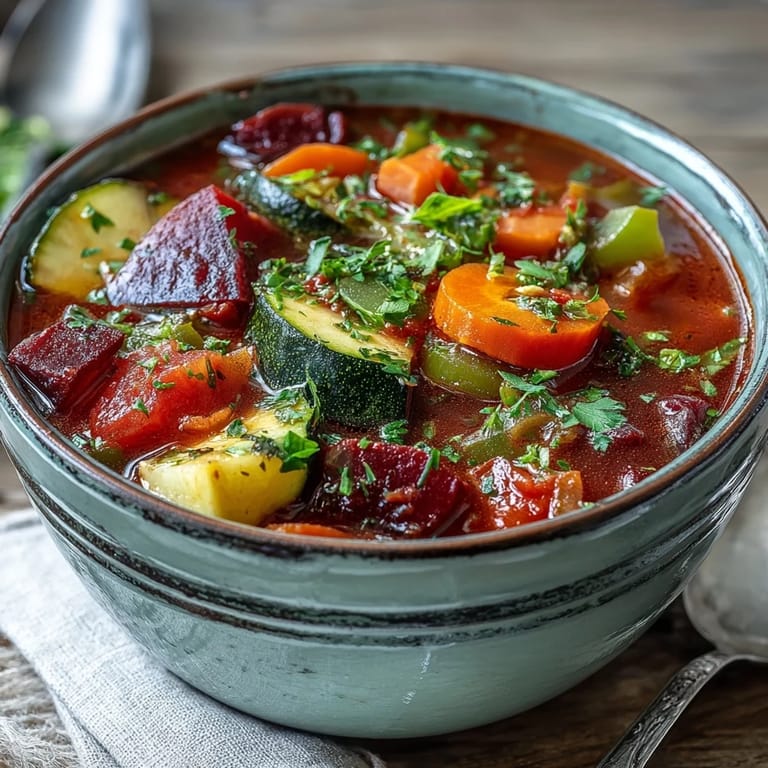
What started as a concept—eating the rainbow for health—became something I actually understood when I made this soup. Each color brought different nutrients and subtle flavor notes, and watching them mingle in the pot felt like doing something tangible for my body. The purple from beetroot, orange from carrots, pale green from courgette, red from tomatoes—it wasn't just pretty; it was proof that you were getting a full spectrum of what vegetables have to offer.
Variations Worth Trying
The skeleton of this soup is flexible enough to bend with seasons and moods. In winter, I've added diced sweet potato and extra turmeric for warmth; in summer, I've stripped it back to just carrots, courgette, and tomatoes with more fresh herbs. The core method stays the same—start with aromatics, build your colors, add broth, simmer gently—but everything else is an invitation to make it your own.
Serving Suggestions and Pairings
This soup stands beautifully on its own, but there are small touches that make it feel like a complete meal. A thick slice of whole-grain bread torn at the table adds texture and substance, while a squeeze of extra lemon brightens everything in your bowl. If you're in the mood for protein, a drained can of chickpeas stirred in with the broth transforms it into something more substantial, though it stays light enough that you won't feel weighed down afterward.
- A crisp Sauvignon Blanc or mineral-forward white wine is your friend, cutting through the earthiness with clean acidity.
- Herbal tea—chamomile, mint, or ginger—pairs unexpectedly well, especially if you're looking for something warming without caffeine.
- Serve it at different temperatures: hot on cold days, lukewarm on days when you want something nourishing but not steaming.
 Save
Save 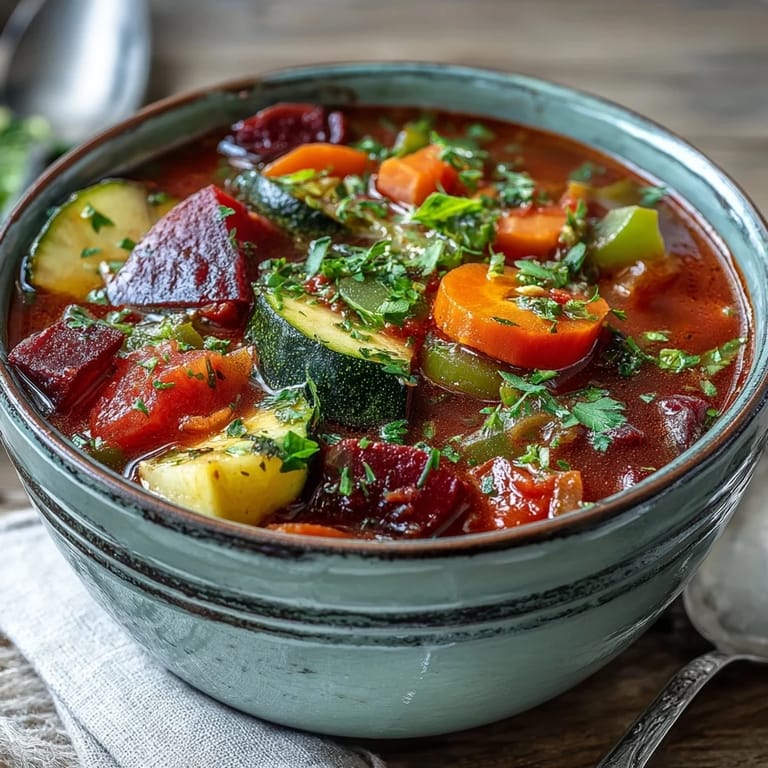 Save
Save This soup has a way of turning an ordinary evening into something gentler and more intentional. Every time you make it, you're not just feeding yourself—you're making a small promise to show up for your body with something genuine.
Recipe FAQs
- → Can I make this soup ahead of time?
Yes, this soup stores beautifully in the refrigerator for up to 4 days. The flavors actually deepen overnight, making it ideal for meal prep. Reheat gently on the stovetop or in the microwave.
- → Can I blend this soup for a smoother texture?
Absolutely! Use an immersion blender directly in the pot or transfer to a regular blender for a creamy consistency. Blend until smooth or leave it partially chunky for more texture.
- → What can I substitute for beetroot?
Sweet potato, butternut squash, or additional carrots work well as substitutes. They'll change the color slightly but maintain the soup's hearty, nourishing qualities.
- → How can I make this soup more filling?
Add a can of drained chickpeas, white beans, or cooked lentils during the simmering stage. You can also serve with crusty whole-grain bread or top with toasted seeds for added protein and texture.
- → Can I freeze this soup?
Yes, this soup freezes well for up to 3 months. Cool completely before transferring to freezer-safe containers, leaving some space for expansion. Thaw overnight in the refrigerator before reheating.
- → What other seasonings work well in this soup?
Fresh ginger, herbs like thyme or basil, a pinch of chili flakes for heat, or a dash of balsamic vinegar for depth all complement the vegetables beautifully. Adjust to your taste preferences.