 Save
Save There's something about the smell of butter and sugar creaming together that stops me mid-morning, every single time. My grandmother kept a tin of shortbread in her pantry, wrapped in wax paper, and I'd sneak pieces while she wasn't looking—though I'm pretty sure she always knew. These cookies are simple enough that a child can make them, yet somehow they taste like the kind of patience and care that only homemade things possess. The melt-in-your-mouth texture comes from a trick most people don't think about: cornstarch in the dough, which makes them tender instead of tough. Once I understood that one detail, my shortbread went from good to unforgettable.
I made these for my neighbor's afternoon tea party last spring, and she actually asked for the recipe on a napkin before I even left her kitchen. The look on her face when she bit into one—eyes closed for a second, like she'd traveled somewhere warm—that's when I knew these cookies were worth keeping in regular rotation. Butter has a way of making people pause and remember why simple things matter.
Ingredients
- Unsalted butter (1 cup, softened): Use real butter, the good kind you'd actually taste on toast, because it's the star of this show and there's nowhere to hide mediocre ingredients.
- Granulated sugar (½ cup): This amount keeps the cookies tender rather than crisp, which is exactly what you want.
- All-purpose flour (2 cups): Don't sift this into the bowl carelessly; it matters more than you'd think.
- Cornstarch (¼ cup): This is the secret weapon that transforms regular shortbread into something that dissolves on your tongue instead of crunching.
- Fine sea salt (¼ tsp): Just enough to remind you that salt makes butter taste more like itself.
Tired of Takeout? 🥡
Get 10 meals you can make faster than delivery arrives. Seriously.
One email. No spam. Unsubscribe anytime.
Instructions
- Heat your oven and prepare:
- Set the oven to 325°F and line your baking sheet with parchment paper—this is the temperature that lets the cookies bake gently without browning, which is the whole point.
- Cream the butter and sugar:
- Beat them together until the mixture is pale, fluffy, and smells absolutely irresistible. This takes about 2–3 minutes with an electric mixer, or longer with a wooden spoon if you're patient enough.
- Mix in the dry ingredients carefully:
- Sift the flour, cornstarch, and salt together first, then fold them into the butter mixture until just combined. The dough will look almost too dry at first, then suddenly it'll come together—stop there, before you overwork it and toughen the cookies.
- Press and score the dough:
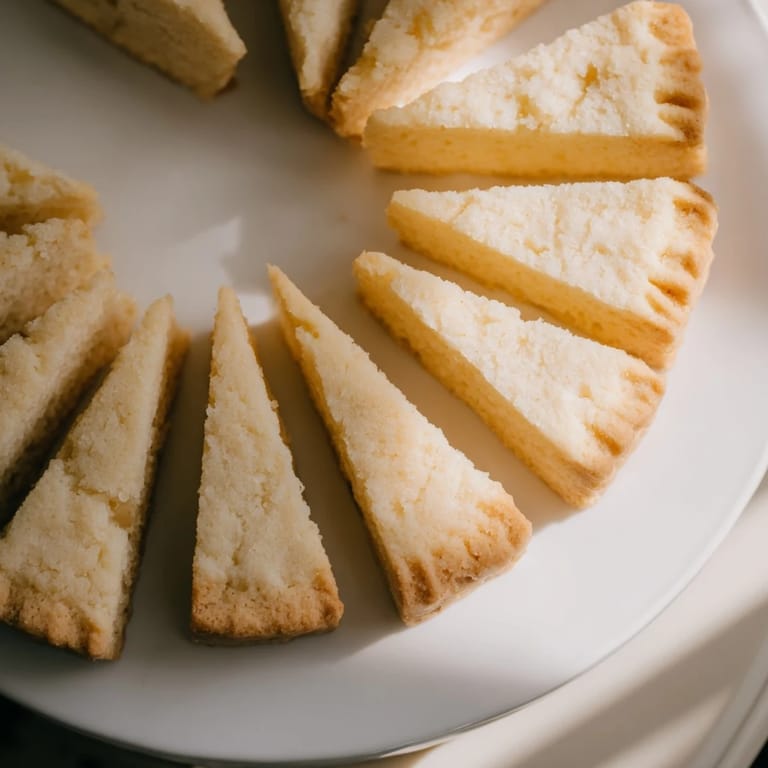
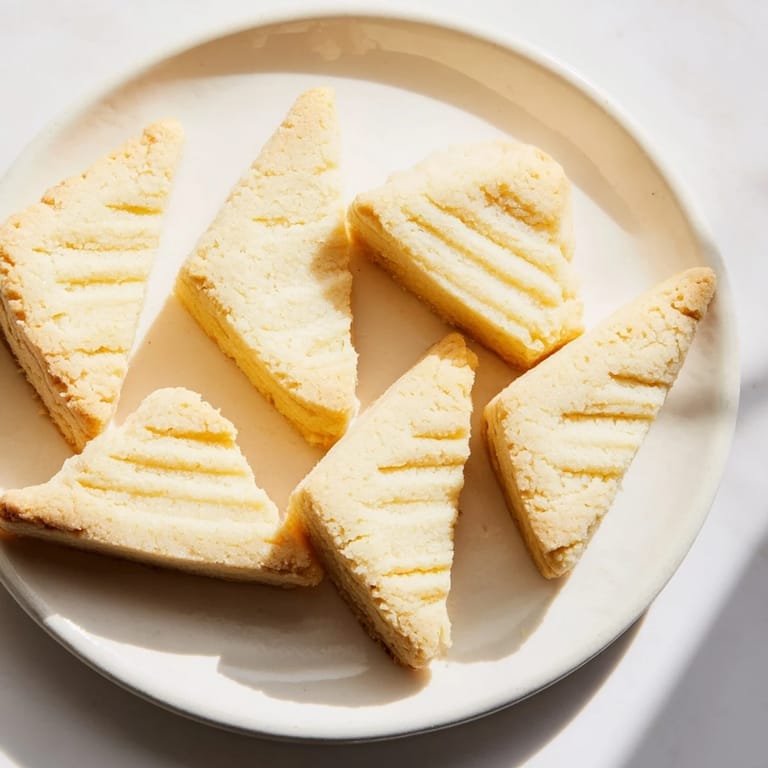
- Transfer the dough to an 8x8-inch pan or press it into a rectangle on the baking sheet, about ½ inch thick. Use a sharp knife to score wedges or fingers, then prick each piece lightly with a fork—this helps them bake evenly and look intentional.
- Bake low and slow:
- Bake for 22–25 minutes, watching for pale golden edges, never a deep brown. The cookies will firm up as they cool, so pulling them out while they still feel slightly soft is the right call.
- Cool and cut with intention:
- Let them rest in the pan for 5 minutes, then cut along the scored lines while they're still warm enough to cut cleanly. Transfer to a cooling rack and wait for them to reach room temperature before eating, if you can.
 Save
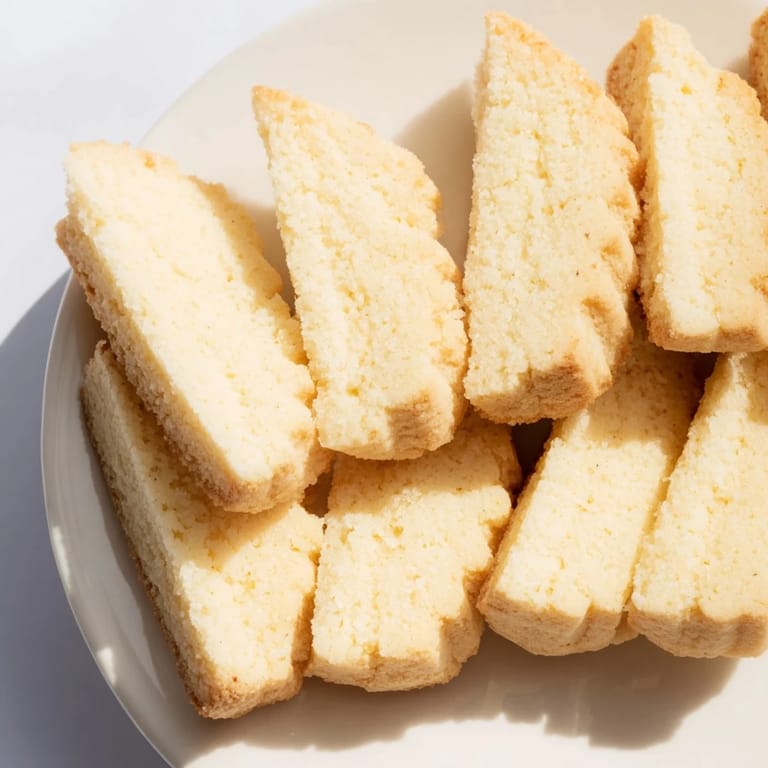
Save My daughter once asked why these cookies were called shortbread, thinking they were short in size rather than short in texture. I realized I'd never really explained it—the word comes from the high ratio of butter to flour, which creates that crumbly, tender structure. Now when she makes them, she gets it.
Variations That Still Taste Like Home
Shortbread is a canvas if you want it to be, though sometimes I make it exactly as written because perfection doesn't need tinkering. A teaspoon of lemon or orange zest mixed into the dough brings brightness and feels a little fancy without being fussy. I've also dipped cooled cookies in melted dark chocolate, letting it set on parchment paper, which transforms them into something almost indulgent. Vanilla extract works beautifully too, though use it sparingly so it doesn't overpower the butter.
Storage and Making Ahead
These cookies keep in an airtight container for up to a week, which means you can make them on a lazy Sunday and have them ready for whenever tea or coffee calls. I've learned that storing them between layers of parchment prevents them from sticking to each other, and keeping them in a cool spot (not too warm) helps them stay crisp at the edges and tender inside. You can even freeze the shaped dough and bake it directly from the freezer, adding just a few extra minutes to the baking time.
Why Simple Recipes Deserve Your Attention
When a recipe has only five ingredients, there's nowhere to hide—every choice matters, which is why I've spent years getting this one right. The best versions I've made came from understanding why each ingredient is there and respecting the quiet precision it takes to make something so seemingly simple taste so perfectly done.
- Let butter soften at room temperature for 30 minutes instead of trying to speed it up in the microwave, which can make it partially melt and throw off your ratios.
- Use a fork to prick the dough before baking so steam escapes evenly and the cookies bake through without puffing unevenly.
- The cookies will still be slightly soft when warm, but they'll continue to firm up as they cool, so don't panic and overbake them.
 Save
Save These cookies remind me that not everything needs to be complicated to be special. Made with patience and real butter, they're proof that simplicity done well is its own kind of magic.
Recipe FAQs
- → What gives shortbread its crumbly texture?
The combination of softened butter and cornstarch alongside flour results in a tender, crumbly texture that melts in your mouth.
- → Can I add flavors to the dough?
Yes, incorporating finely grated lemon or orange zest adds a fresh citrus twist to the buttery base.
- → How do I prevent the edges from browning too much?
Baking at a moderate temperature and removing the golden pieces promptly helps maintain a pale, delicate finish.
- → What is the best way to store shortbread?
Keep the pieces in an airtight container at room temperature for up to one week to preserve freshness and texture.
- → Are there simple serving suggestions?
Shortbread pairs wonderfully with tea or coffee and can be dipped in melted chocolate for a decadent variation.